
Scope
Water softener installation in Georgetown, TX, from loop to drain
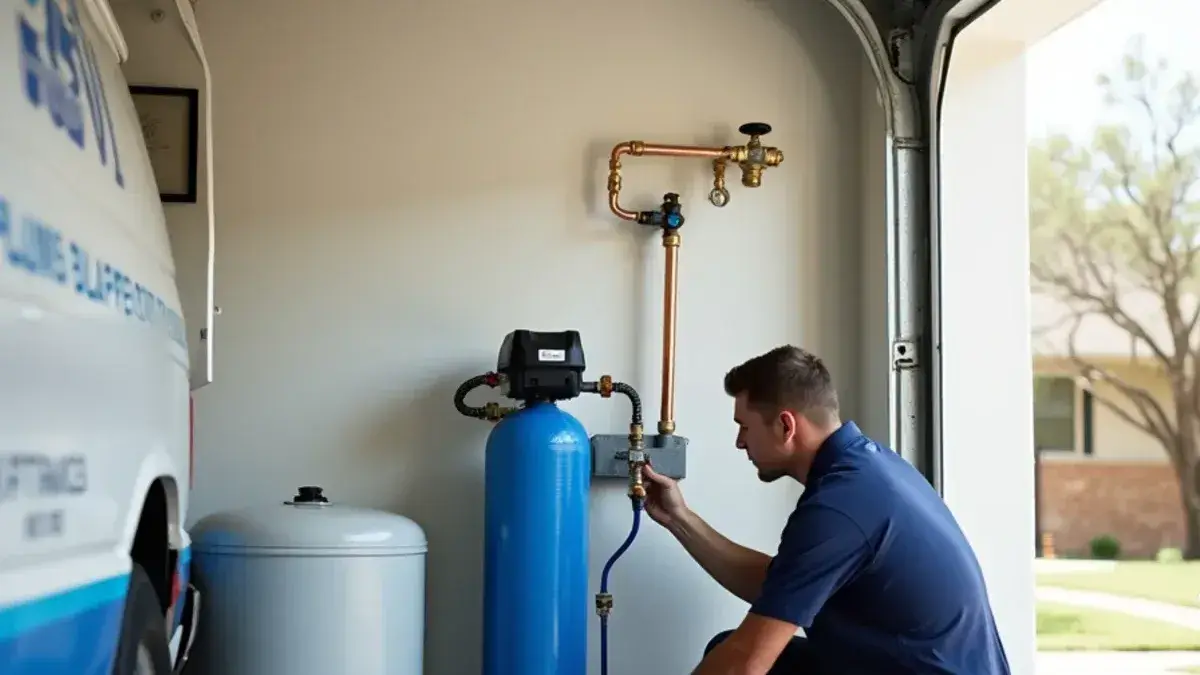
The cabinet in the garage is the visible part. The plumbing around it decides whether it protects the house.
A softener swaps calcium and magnesium for sodium or potassium as water passes through a bed of resin beads. When the resin is spent, the control valve flushes it with brine and sends the rinse to a drain. That cycle only works if the unit is sized to your hardness and plumbed so treated water reaches the right fixtures.
Many houses in the area were built with a softener loop. That is two capped pipes in the garage that send indoor water through a softener while hose bibs stay on hard water. Where there is no loop, we build the connection at the main.
- New installs on an existing loop, or a new loop cut into the main line
- Replacement of failed or undersized units, with the old one hauled off
- Bypass valves so the softener can be isolated for service
- Drain lines with an air gap and a brine-tank overflow
- Repairs to control valves, injectors, brine lines and timers
- Optional carbon filtration ahead of the softener for taste and odour
Local water
How hard is Georgetown’s water, and what is it doing to the house?
The answer depends on which treatment plant serves your street.
Georgetown Utility Systems describes its supply as hard to very hard. Water from the Lake Georgetown and Southlake plants tests around 176 to 178 mg/L, roughly 10 to 11 grains per gallon. The Park and Southside plants run about 309 to 320 mg/L, close to 19 grains.
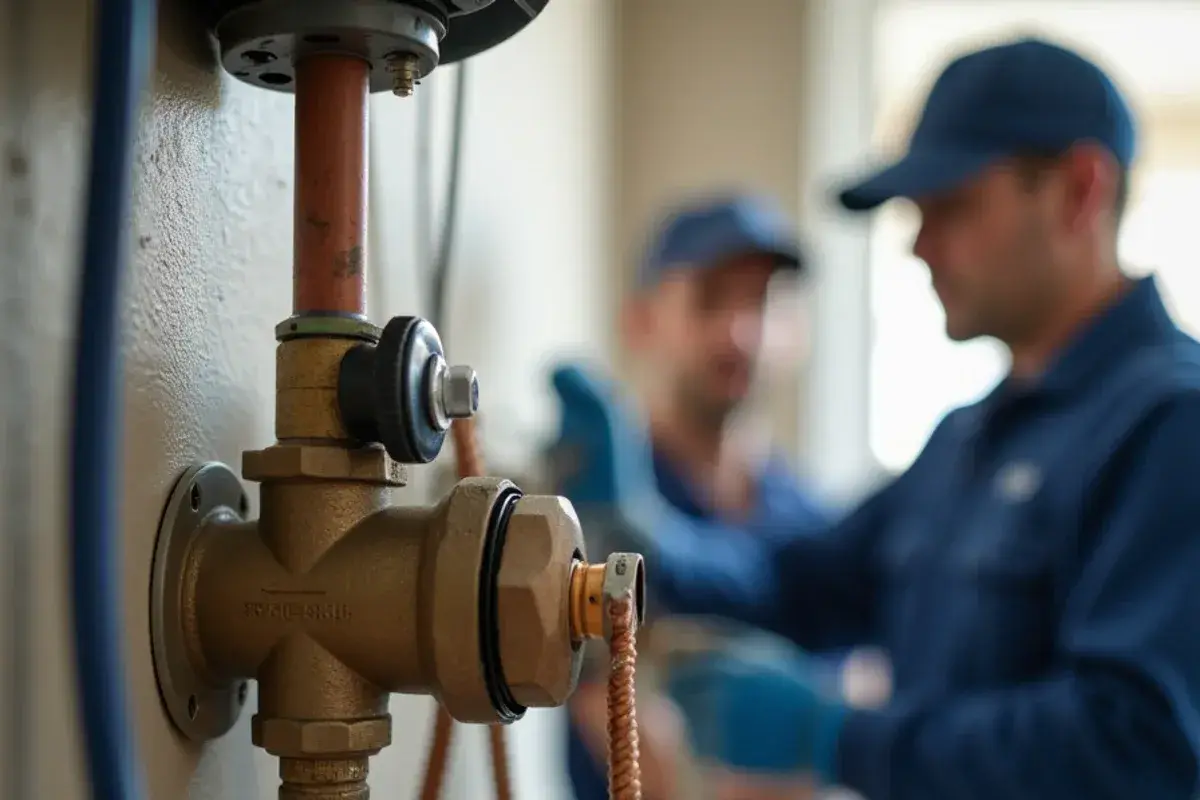
At those levels, mineral leaves a trail. It layers onto the floor of a tank heater and coats tankless exchangers. It crusts aerators and showerheads and spots glass. West of I-35, homes on private wells in Edwards limestone often see harder water still.
Hard water is costing you when:
- White crust returns to faucets within weeks of cleaning
- Shower glass stays cloudy no matter what you scrub with
- Soap and shampoo barely lather
- The water heater pops or rumbles as it heats
- An old softener runs but the spots and scale are back

The install
Test, size, plumb, program: putting a softener in properly
A typical install on an existing loop takes part of a day. Building a new loop adds time.
Test the water at your tap
City figures give a range; your own tap gives the number. On wells we also check for iron, which adds to the load the resin must handle and changes the settings.
Size the unit to the household
Hardness times people times daily use sets the grains removed per day. We size the resin so it regenerates every several days at an efficient salt setting, not every night.
Locate or build the loop
An existing loop is checked to confirm which fixtures it serves. Without one, we tie in at the main after the outdoor branches, so hose bibs and irrigation stay on untreated water.
Plumb the bypass, drain and overflow
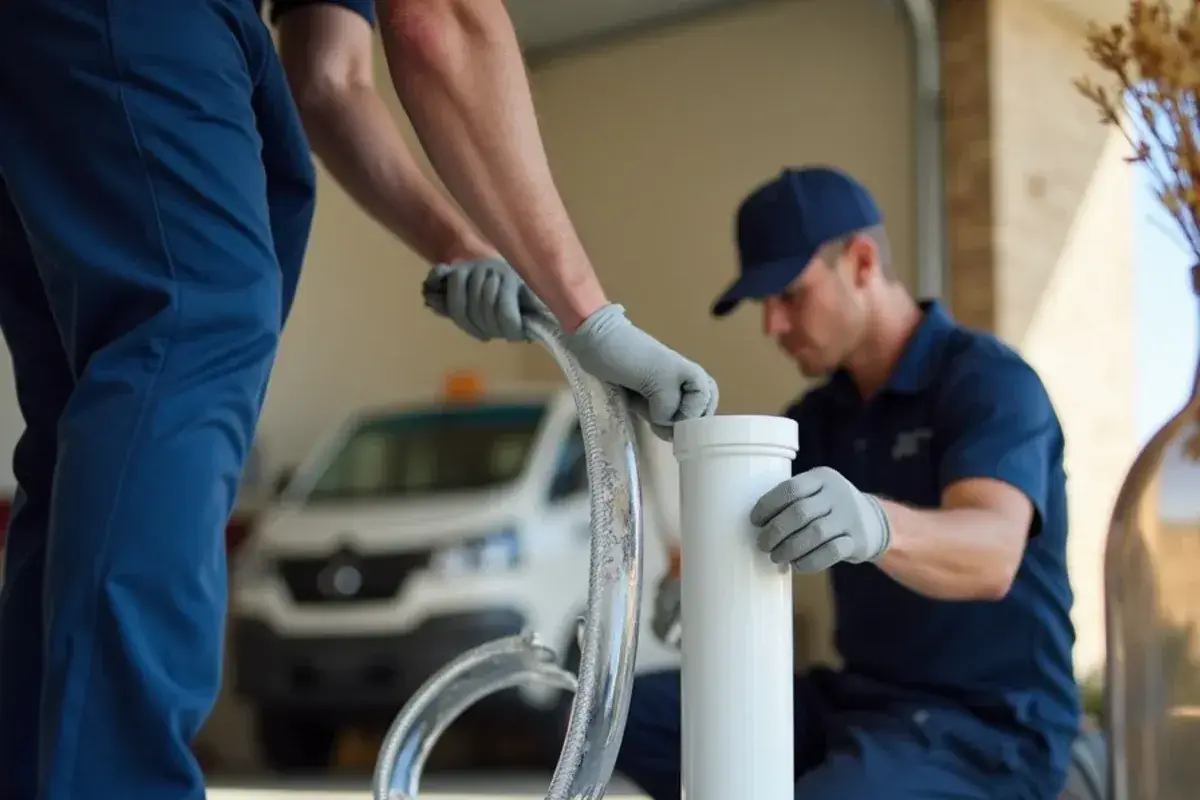
A bypass valve isolates the unit. The regeneration drain runs to a standpipe or floor drain with an air gap, so sewer water can never siphon back. The brine tank gets its own overflow line.
Program and regenerate
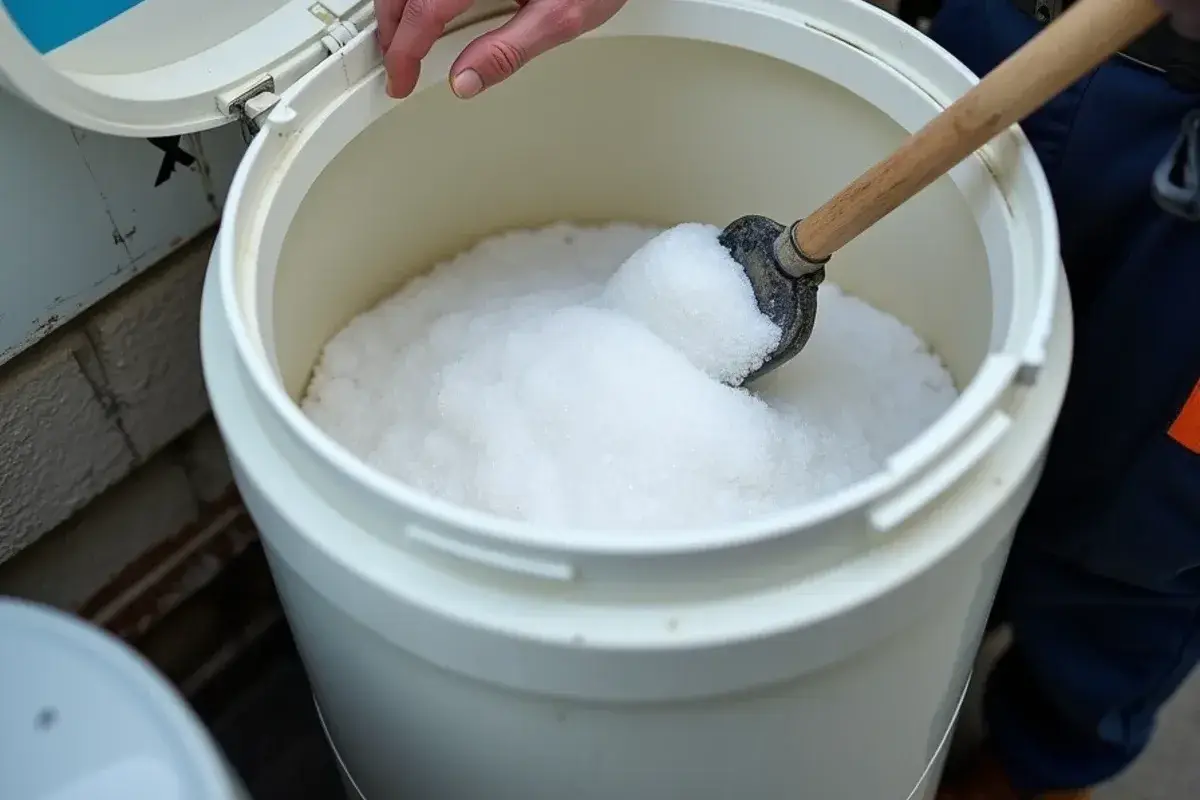
We set the measured hardness, capacity and an overnight regeneration time, add salt, then force a first regeneration and confirm the drain flows.
Check soft water and show you upkeep
A hardness test at a kitchen or bathroom tap confirms the result. You see how to check salt, break a salt bridge and put the unit in bypass.
Sizing and cost
What size softener does your home need? Sizing and cost factors
Undersized units regenerate constantly and waste salt; oversized ones can let resin sit too long. Size drives cost, but it is not the only factor.
| Household | At 10.5 grains | At 19 grains |
|---|---|---|
| 2 people | about 1,600 grains a day | about 2,900 grains a day |
| 4 people | about 3,200 grains a day | about 5,700 grains a day |
| 6 people | about 4,700 grains a day | about 8,600 grains a day |
Multiply the daily figure by the days you want between regenerations and you have the working capacity to buy. A family of four on the harder water needs roughly twice the resin of the same family on the softer supply.
Beyond size, cost moves with whether a loop exists, how far the drain and power outlet are, any iron or carbon filtration, and removal of an old unit. We quote on site after testing.
Permits and licensing
Softener permits, drain rules and Texas licensing
A softener is a plumbing connection to the drinking-water supply and the sewer, so it is regulated like one.
The City of Georgetown’s permit guidance lists water softeners among the work that needs a permit, next to water heater replacement. We pull it when the job calls for one. The regeneration drain needs an air gap so wastewater can never be drawn back into the supply.
At state level, the Texas Commission on Environmental Quality requires anyone who installs or services water treatment equipment for pay to hold a Water Treatment Specialist license. People holding a plumbing license under Occupations Code chapter 1301 are exempt. Plumbing itself is regulated by the Texas State Board of Plumbing Examiners.
Why Alta Vista Plumbing
Why softener owners call Alta Vista Plumbing back
Four of our Google reviews are about softeners, and they share a theme.
One customer’s old unit blew out; the replacement came with the problem explained in plain terms. Another had a loop already in the garage, and the new softener was connected to it cleanly. A third wanted to understand why the softener was misbehaving and left knowing. A fourth hired us back for a kitchen faucet afterwards.
We have worked on local plumbing since 1999 and hold a 4.7 average from 436 Google reviews. If a repair to the control valve will do, you hear that before a new unit is mentioned.
Softener customers in their own words
4.7 average from 436 Google reviewsRead our Google reviews
Installed a water softener after old one blew out...very knowledgeable, professional and explained the problems that occurred in layman terms.. definitely my plumber of choice…
Lydia Romero hooked up the water softener to the loop I had in the garage. She was very professional and did a fantastic job. I will absolutely recommend your company and especially Lydia to all my friends and neighbors.…
Reply from Alta Vista Plumbing
Thank you Dianna, we appreciate your business and you taking the time to review us, I'll be sure to relay your kind words with Lydia as well.
I highly recommend Alta Vista services. Steve was very knowledgeable and friendly. He answered all my questions and helped me better understand my problem with my water softener. Very professional and reasonably priced service. Thanks.
The entire experience was wonderful! They are friendly, extremely knowledgeable, accommodating, and thoroughly professional. They replaced our water softener and did an outstanding job. We are hiring them back to replace our kitchen faucet. We absolutely cannot say enough good things about the company and the quality of the work. We recommend them 100% , no questions asked!
Reply from Alta Vista Plumbing
Hi Kate Fields! Thanks so much for your feedback! We're really glad you enjoyed our service. Please let us know if we can help you with anything further and thank you for taking time out of your day to leave us this super kind review.