Built in the boom
Polybutylene-era houses from the 1970s and ’80s boom
A city that quadrupled in one decade and nearly tripled in the next built a lot of houses with the same materials.
The Handbook of Texas counts 2,811 residents in 1970, 11,812 in 1980 and 30,923 in 1990. Round Rock West, off McNeil Road just west of I-35, is the textbook example; Community Impact lists its build-out year as 1985.
Houses from that era often carry gray polybutylene supply pipe, installed in homes from about 1978 to 1995. It was cheap and flexible, but it weakens from the inside and tends to let go at the fittings without warning. A repipe replaces it before that happens.
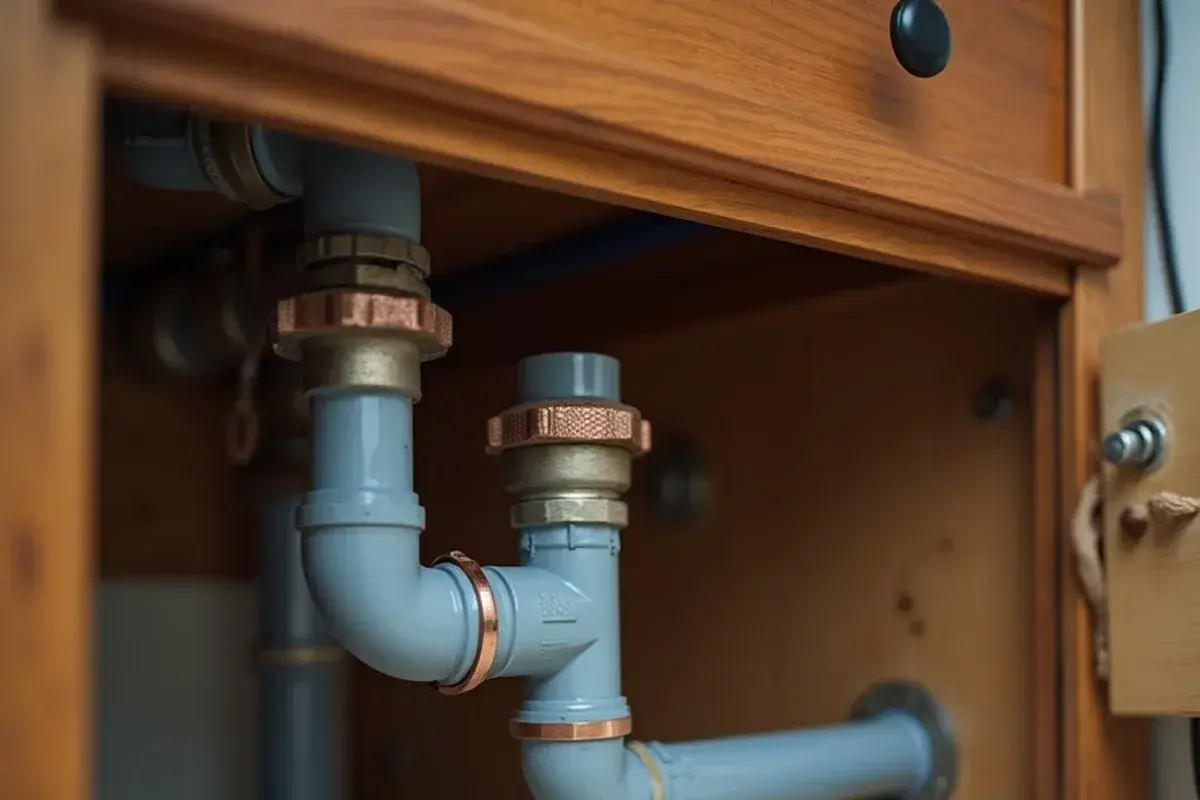
The ground adds a second risk. The Balcones fault line runs right through town, so lots west of the interstate tend to sit on limestone while the east side rides blackland clay. Clay movement strains the copper and drain lines under a slab, and that is how many leaks on the east side begin.
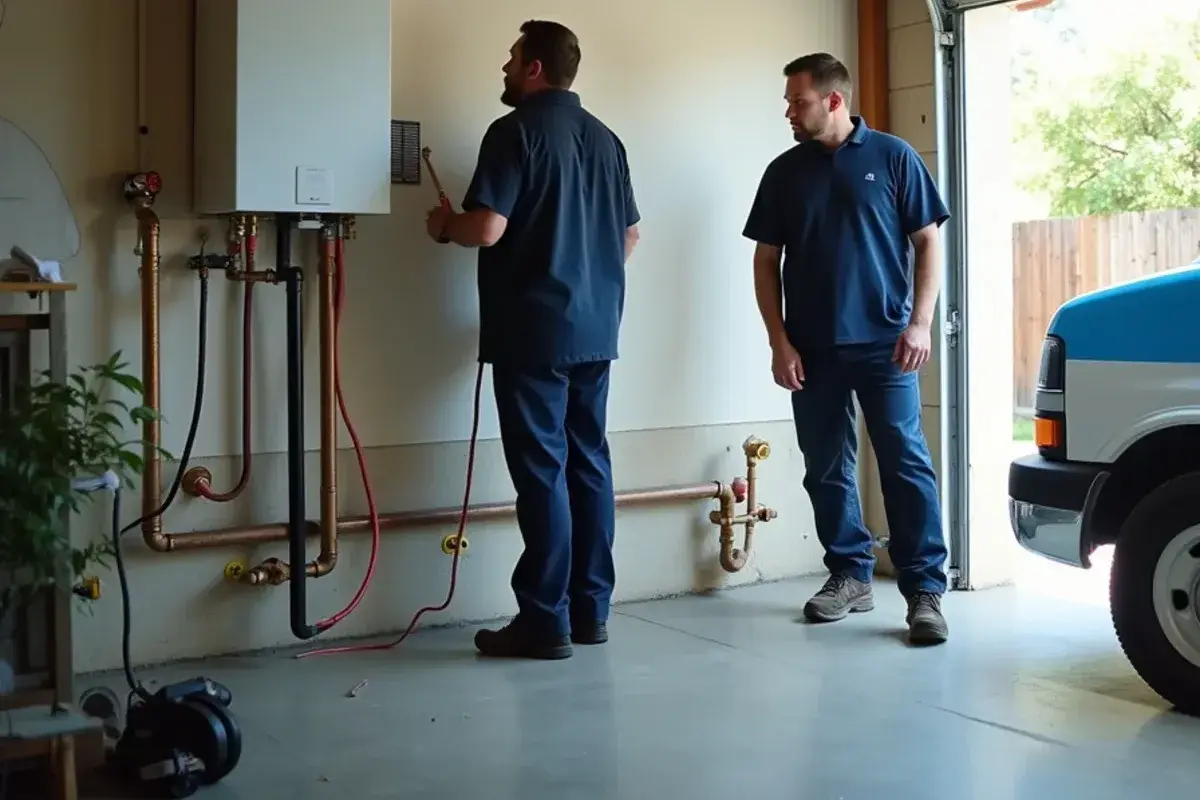
Water heaters in these houses are on their second or third tank by now. Energy.gov puts a storage tank’s life at about 10–15 years, so the gas connection, venting and relief valve left by the last swap deserve a careful look.

Local knowledge
Brushy Creek, Lake Georgetown water and the I-35 corridor
Where the town started, where its water comes from, and where the commercial work is.
Settlers built on the north bank of Brushy Creek in 1848. In 1854 the town took its name from a limestone rock in the creek bed, where the Chisholm Trail later crossed. When the railroad arrived in 1876 the town shifted toward the tracks, and the original blocks became Old Town.
Tap water comes mostly from Lake Georgetown, plus Edwards Aquifer wells and Lake Travis water treated by the Brushy Creek Regional Utility Authority. The city’s 2025 report puts hardness at 249 mg/L, about 14.55 grains per gallon, and calls it a cosmetic issue. Those same minerals are what settle in tank bottoms and faucet aerators.
Commercial calls cluster along I-35 and SH 45, between the Dell headquarters campus and the La Frontera retail centres. Shops and offices there need restroom fixtures, water heaters and drain lines kept running. Addresses inside Brushy Creek MUD follow that district’s own plumbing permit rules rather than the city’s.