

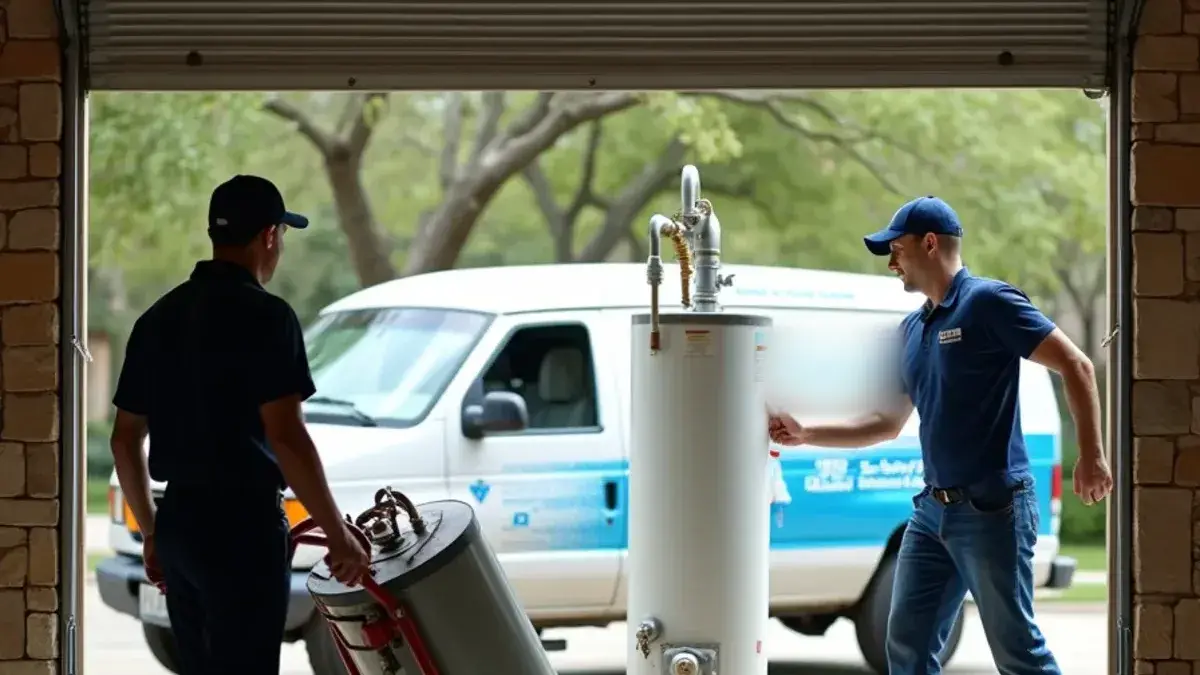
Cost drivers
What drives water heater replacement cost?
The heater itself is only one line on the quote. The rest depends on your house and on what the last installer left behind.
Two neighbours can get very different quotes for what sounds like the same job. One has a 40-gallon electric tank in a garage closet, ten steps from the driveway. The other has a 50-gallon gas tank on an attic platform with an old flue, no drain pan and a relief line that ends in the insulation.
Nobody can price that second job from a phone call, which is why this guide carries no numbers. What it can do is show you the parts of the work that move the total, so the quote you get makes sense.
| Factor | Why it moves the total |
|---|---|
| Fuel type | Gas and electric units differ in price and hookup. Switching fuels means a new gas line or a new heavy circuit. |
| Capacity | A larger tank costs more, weighs more and may not fit the old platform, closet door or attic opening. |
| Venting | A gas tank may reuse a sound flue. Power-vent and tankless units need new venting runs and wall or roof penetrations. |
| Expansion tank | A closed system with a pressure-reducing valve or check valve needs thermal expansion control. |
| Permit and inspection | Most cities in the area require one for a replacement, plus an inspection visit. |
| Haul-away | The old unit has to be drained, carried out and disposed of, which is harder from an attic. |
| Code updates | Missing pans, relief-line routing, sediment traps or gas connectors get corrected under the new permit. |
| Location and access | Attic installs take more labour than garage ones, and tight closets can limit unit size. |
Fuel and location usually make the biggest difference. A like-for-like swap in the same spot keeps the gas line, flue and drain where they are. Every change from the old setup adds work that has to be done, inspected and paid for.
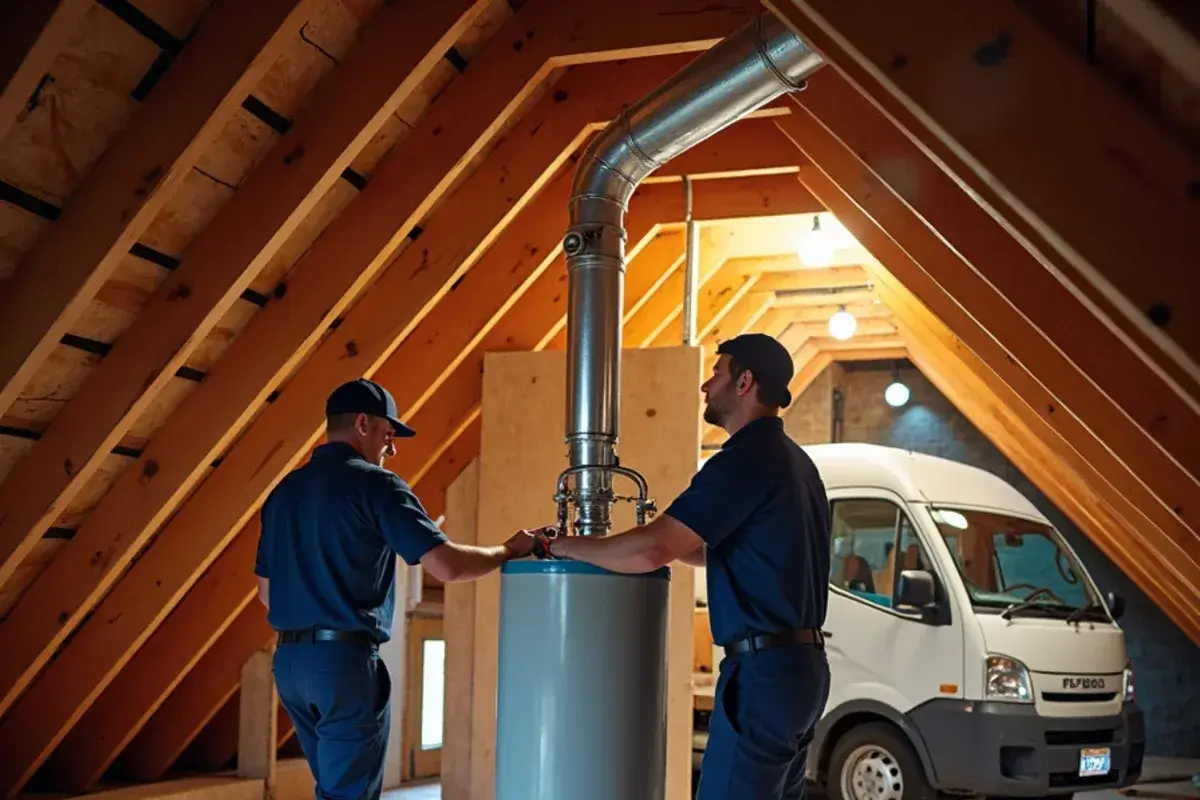
Tank vs. tankless
Tank or tankless: which costs less over its working life?
A tankless unit costs more on day one and may cost less per year of service. Whether it wins depends on the house.
The U.S. Department of Energy puts a typical storage tank at about 10–15 years of service, and a tankless unit at 20 years or more. Stretch the install cost over those lifespans and the gap narrows. A tank also burns energy keeping 40 or 50 gallons hot all day, while a tankless unit heats only what flows through it.
The catch is installation. A gas tankless water heater fires far harder than a tank while it runs, so the gas line often needs upsizing from the meter. It also needs its own venting, and an electric model may need more panel capacity than an older house has.
| Storage tank | Tankless | |
|---|---|---|
| Typical service life | About 10–15 years | 20 years or more |
| Install on a replacement | Often reuses the gas line, flue and drain | Often needs a larger gas line, new venting or new circuits |
| Hot water supply | Limited by tank size, then a recovery wait | Continuous, but limited by flow rate at any moment |
| Standby loss | Keeps stored water hot whether it is used or not | None while idle |
| Hard-water upkeep | Flush sediment from the tank bottom | Descale the heat exchanger on a schedule |
Hard water decides a lot of this locally. Georgetown Utility Systems measures about 10–11 grains per gallon from two plants and about 19 from two others. Scale builds fast in a tankless heat exchanger at those levels, so plan for regular descaling or a softener ahead of it.
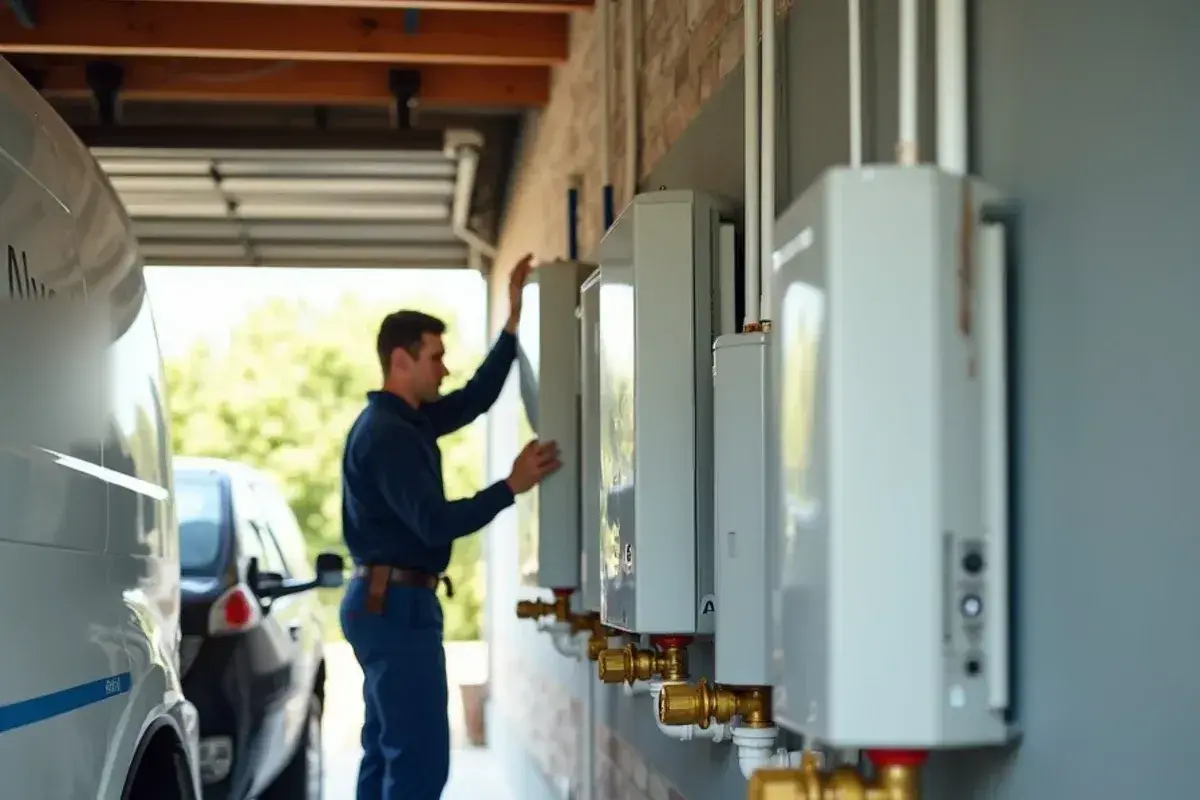
Expert insight
Repair, like-for-like swap or upgrade: an honest trade-off
The cheapest call is not always the cheapest decade. Here is how a plumber weighs it.
Some failures are worth fixing. A burnt-out element, a failed thermostat, a bad thermocouple or a weeping relief valve on a six-year-old tank is a repair job. Our water heater repair and replacement visits start by deciding which side of that line you are on.
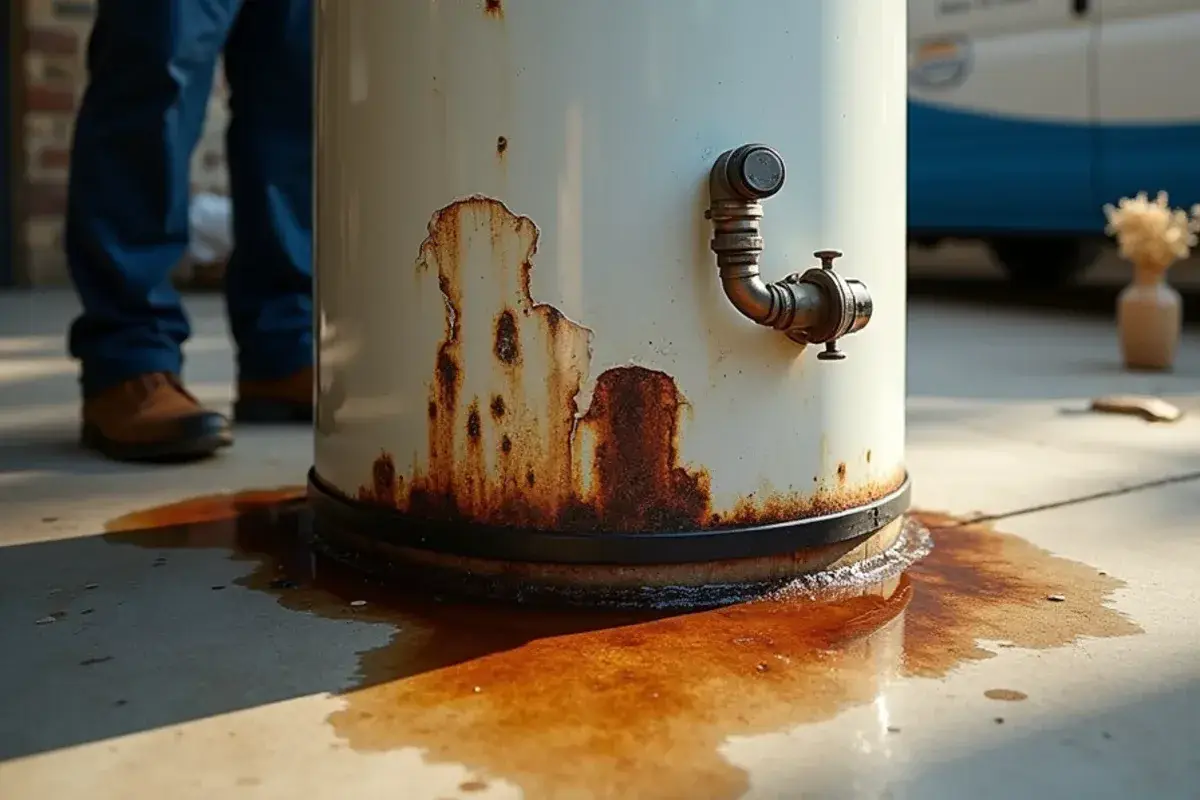
Other failures end the conversation. Once the steel tank itself leaks, there is no patch; rust at the base or water under the jacket means replacement. A tank near the end of the 10–15 year range is also a weak candidate for a costly repair, especially on hard water.
Age patterns follow neighbourhoods. In Round Rock, the 1970s–80s streets west of I-35 are on their second or third heater, often with older flues and garage platforms that need updating. Hard lake water arrives there through BCRUA, so sediment shortens tank life too.
Newer subdivisions are a different story. Along the 183A corridor in Leander, Crystal Falls and Travisso homes went up fast, so as they age their first builder-installed heaters will come due in waves. A like-for-like swap is usually the simplest path there, because the original gas line and venting were sized for that unit.
Upgrading to tankless at that moment makes sense when you plan to stay well past ten years and the gas service can support it. It makes less sense when the house is for sale soon, or when the gas line, venting and wall work would double the job.
Permits and code
Which code updates come with a replacement permit?
The permit is a cost line, and it also catches problems the last install left behind.
The City of Georgetown lists water heater replacement among the projects that need a permit. Round Rock, Cedar Park, Leander and Pflugerville require permits for the same work. The inspector checks the new install against current code, not the code in force when the house was built.
Updates an inspector commonly expects:
- A thermal expansion tank where a pressure-reducing valve or check valve closes the system
- A drain pan with a drain line under heaters in attics or above finished floors
- A temperature and pressure relief line run full size to an approved discharge point
- A sediment trap and a new approved connector on the gas supply
- Correct vent pitch, clearances and connections for gas units
- Safe access to an attic unit, with a platform and a clear path
None of these items is optional once the permit is pulled, so a quote that skips them is not comparing like with like. Alta Vista Plumbing pulls the permit when the job requires one and books the inspection as part of the work.
Getting quotes
How do you compare two water heater quotes?
Compare scopes before totals. These steps make two quotes line up.
Read the data plate first
Photograph the label on the old unit. It shows the fuel, the capacity and usually the manufacture date, so every plumber quotes against the same starting point.
Note where it sits and how you reach it
Garage, closet or attic, and whether the attic has a platform, a pull-down ladder and a clear walkway. Access changes labour more than most people expect.
Decide on fuel and type before the visit
Like-for-like, a larger tank or tankless. If you are unsure, ask for both, so you can see what the change itself adds.
Ask what each quote includes
Permit and inspection, expansion tank, drain pan, relief line, gas connector, venting work and haul-away. A lower total that leaves these out is a smaller job, not a better price.
Get it on site and in writing
A plumber who has seen the flue, the gas line and the attic can quote the real job. We quote on site before work starts, with the options explained.