
The scope
What a whole-house repipe replaces, and what stays
Every hot and cold supply line from the main shut-off to the fixtures, done as one project instead of a string of patches.
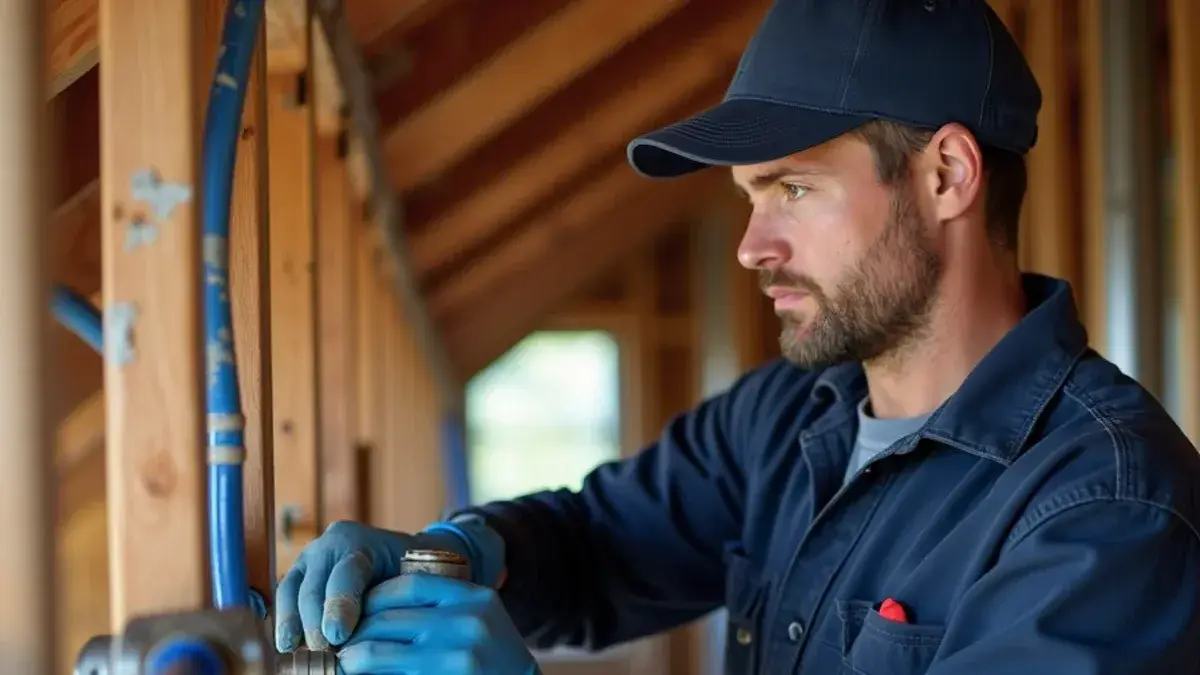
A repipe swaps the pressurised side of the plumbing: the lines that carry water from the main shut-off to every faucet, toilet, shower valve and appliance. Drains and the sewer stay as they are unless they have a problem of their own.
Many older slab homes have supply lines buried in or under the concrete. A repipe abandons those runs and sends new pipe through the attic and down inside the walls, which also takes pressurised water out from under the foundation. That is why a repipe is often the answer after a second slab leak.
- New PEX or copper supply lines to every fixture, sized for the number of bathrooms
- A stop valve at each sink and toilet, plus a main shut-off you can actually reach
- Water heater, ice maker and softener loop connections re-made on the new pipe
- Hose bibs replaced, with exposed pipe insulated against the next hard freeze
- City permit, pressure test and final inspection before the walls close
- Access holes in drywall and ceilings patched once the inspection passes
Know your pipe
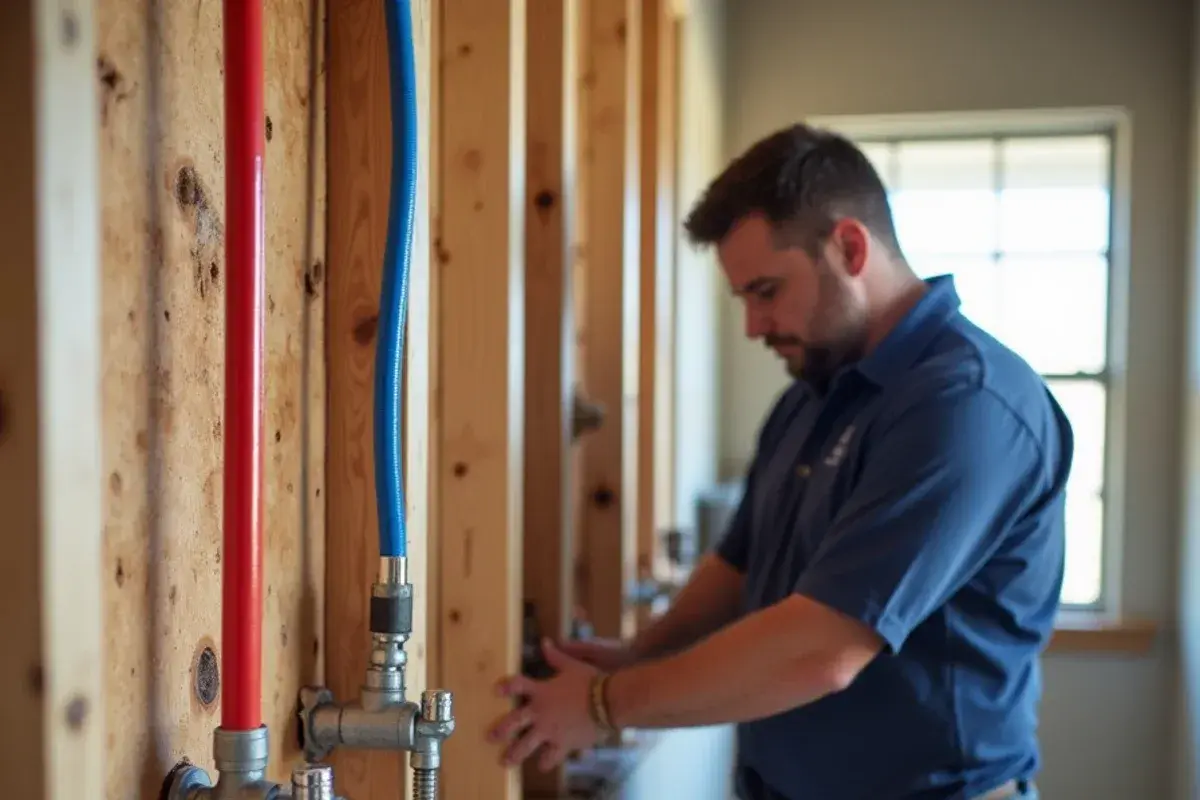
Polybutylene, galvanized or tired copper: which one is in your walls?
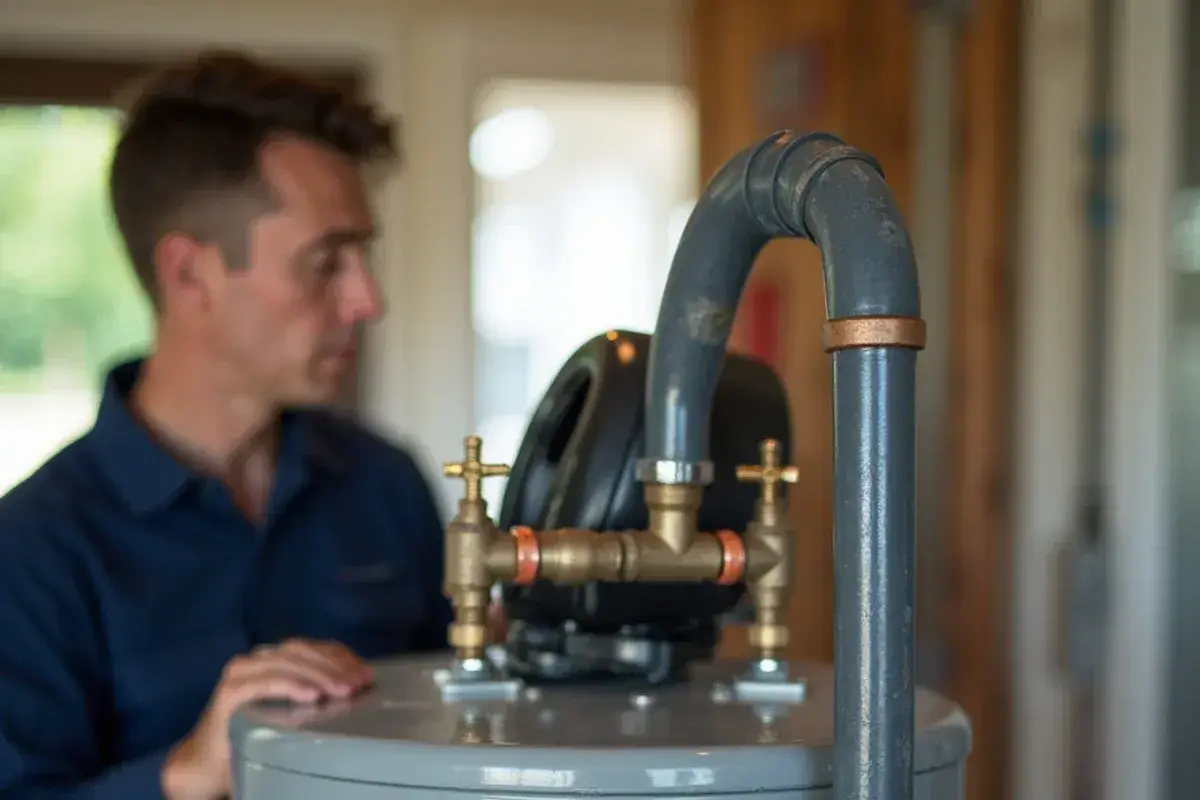
Look where the pipes meet the water heater and under the kitchen sink. The material tells you most of what you need to know.
Polybutylene, installed roughly 1978–1995
Flexible grey plastic, often stamped PB2110, joined with copper or aluminium crimp rings. It tends to weaken from the inside, so fittings crack and joints let go without much warning, often in an attic above a ceiling.
Galvanized steel
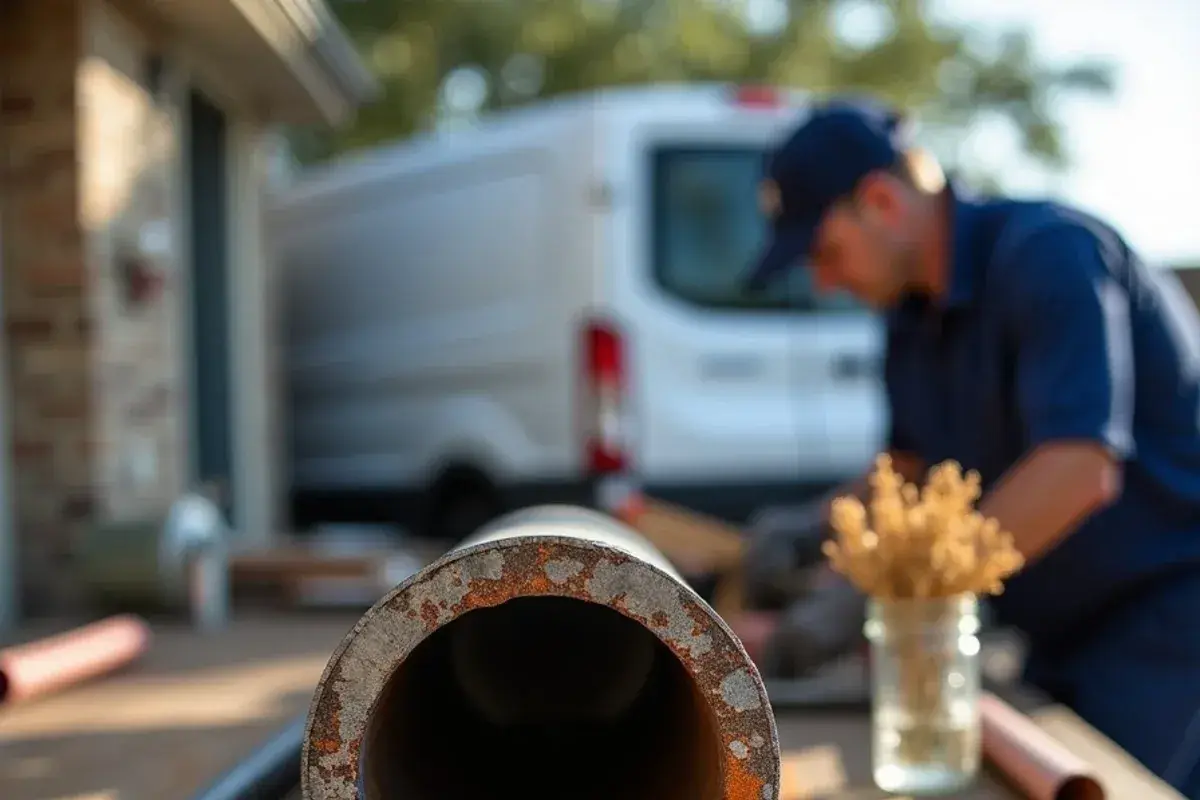
Dull grey threaded pipe, common in older ranch and farm-town homes. Rust builds inside until the bore narrows, pressure fades at every tap and brown water appears after a trip away.
Ageing copper
Copper lasts a long time, but not forever. Repeated pinhole leaks, green crust at joints or a leak under the slab are the point to stop patching and price the whole job.
A repipe is worth pricing when:
- Two or more supply-side leaks have hit the house in a few years
- Pressure is weak at every fixture, not just one faucet
- Hot water runs brown or carries flakes of rust
- A home inspector flagged polybutylene or galvanized supply pipe
- You are remodelling and the walls are already open
How it runs
How a repipe runs, from walk-through to patched walls
A repipe is a planned project, not a rescue call. Here is the order the work follows.
Walk-through and pipe map
We trace where the current lines run, count fixtures, look into the attic and find the main shut-off and water heater. You get the scope, the choice of PEX or copper and a quote on site before any work starts.
Permit and protection
We file the city permit. On the first morning, floors and furniture near each opening are covered, and we agree with you which rooms we need and when.
New lines in while the old ones still work
Where the layout allows, the old system stays live while new pipe goes through the attic and down the walls. That keeps the house usable and the water-off periods short.
Cut-over and pressure test
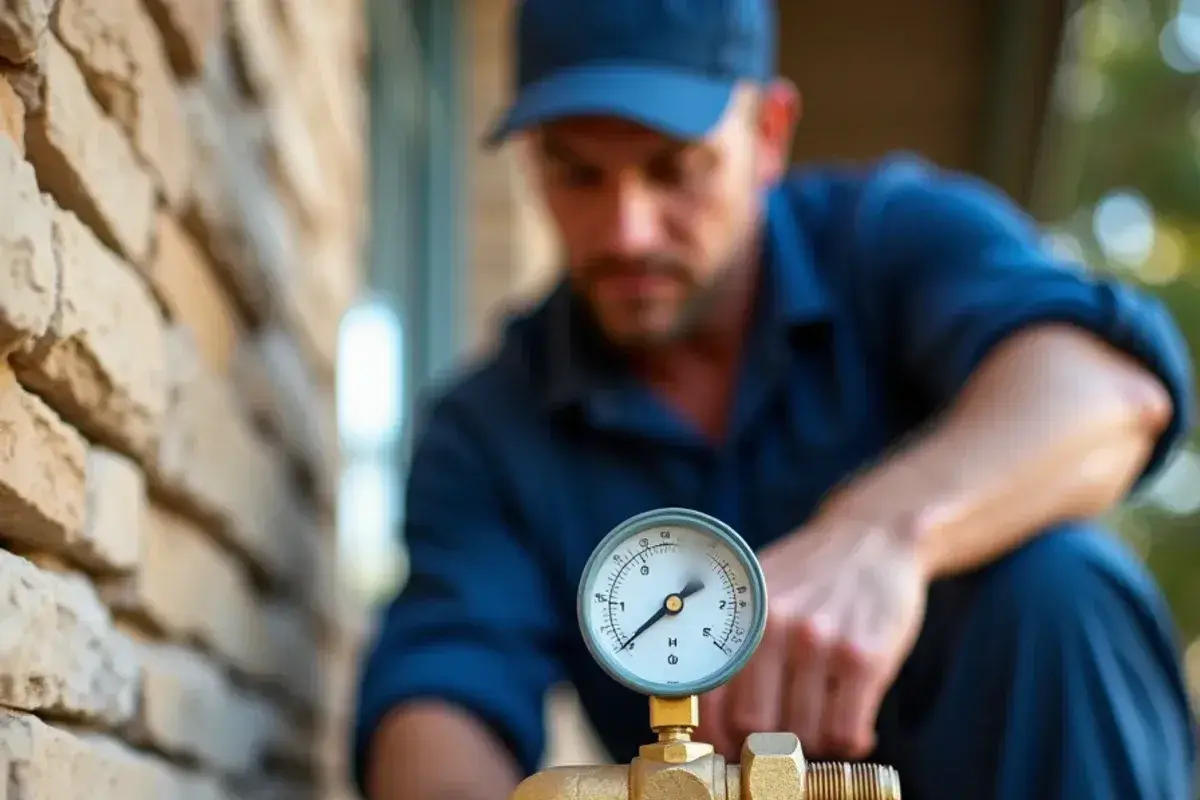
Fixtures move to the new lines one by one. The whole system is then held under pressure and every joint is checked before anything is closed up.
City inspection
The inspector sees the new pipe and the test gauge while everything is still exposed. Walls stay open until the inspection passes.
Patch, flush and hand-over
We flush the lines, clean aerators of debris, patch the access holes and show you where every new shut-off valve sits.
Cost
What sets the price of a repipe in Georgetown, TX?
No two houses route the same way, so we quote on site. These are the factors that move the number.
A repipe is priced on the house in front of us, not on a square-footage chart. Two homes of the same size can differ a lot when one has an open attic and the other has a low roof packed with insulation.
| Factor | Why it matters |
|---|---|
| Fixture count | Every sink, toilet, tub and appliance is another branch and another stop valve. |
| Stories and attic | A single-story house with a walkable attic is the simplest route; a second floor means more wall openings. |
| Pipe material | PEX goes in faster with fewer joints; copper takes more labour and more material. |
| Wall finishes | Plain drywall patches quickly; tile, stone and built-in cabinets take more care. |
| Add-ons | A new main line from the meter, a pressure-reducing valve or a water heater swap done at the same time. |
| Permit | Repipes carry a city permit and an inspection visit across most of the area. |
Timing matters too. If a remodel already has walls open, repiping then saves most of the patching. One of our reviewers had water lines rerouted during a full remodel, which is the easiest moment to do it.
Permits & code
Do you need a permit to repipe a house?
Yes, in most of the area. Here is who sets the rules.
Georgetown, Round Rock, Cedar Park, Leander and Pflugerville all require a permit for a repipe. Georgetown builds to the 2021 International Plumbing Code, in force since November 2023.
The inspector checks pipe sizing, supports and the pressure test before the walls close, so the permit protects you as much as it satisfies the city. We file it and meet the inspector as part of the job.
Statewide, the Texas State Board of Plumbing Examiners regulates plumbing, and every plumbing company works under a Responsible Master Plumber. TSBPE runs a free public search where you can look up any plumber before a project starts.
Why Alta Vista Plumbing
The company behind the repipe: in Georgetown since 1999
A repipe touches every room, so who does it matters.
Alta Vista Plumbing has worked from Georgetown since 1999, for homeowners, landlords and businesses. Our 4.7 average across 436 Google reviews comes from people who lived with the work afterwards.
On a repipe, that shows in the details. One reviewer describes a full remodel in which we rerouted water lines, checked the pressure from the meter to the house and insulated every new line. Others mention that options were explained before anything was quoted.
PEX or copper, one bathroom or four, the first step is the same: call (512) 988-5119 and book a walk-through.
A remodel customer on rerouted water lines
4.7 average from 436 Google reviewsRead our Google reviews
I found myself doing a total remodel on a property recently purchased. Alta Vista went above and beyond to bring my property up to code and added value to the property through doing the following: added an extra bathroom, rerouted water lines, add an outside faucet, added utility connections, assured the water pressure from the meter to the house was accurate and educated us in the drainage system. All the new lines are insulated and Steve Maldonado kept us updated and educated during the entire process. During their service of my property there was one small leak that they promptly fixed as soon as I called them! To this day I have asked them questions pertaining to the plumbing on the property and they respond fast! I highly recommend Alta Vista Services for ALL plumbing jobs. There is no job too big or too small that they can't do!
Excellent plumbing company with knowledgeable and professional staff. They repaired my plumbing issue promptly and in a very timely manner from my initial contact. They showed up on time and were ready with materials and supplies to complete my repair issue. We will use them again without hesitation.
Jared was amazingly helpful and thorough. He managed to balance being a genuinely nice guy with his professional know-how which made having him do the work a pleasure. Steve Maldonado responded in a timely fashion and always kept me up to date with what was happening. His responsiveness and professionalism were what made me give the job to Altavista Services in the first place.