


The numbers
How hard is Georgetown water, plant by plant?
The city publishes its own figures, and they are the ones worth trusting.
Hardness is mostly dissolved calcium and magnesium, reported either in milligrams per litre or in grains per gallon. One grain per gallon equals about 17 mg/L. Softener settings and test kits usually use grains, so that is the number to remember.
The city draws from more than one treatment plant, and they do not deliver the same water. The difference is large enough to change how you size a softener and how often a heater needs attention.
| Treatment plant | Grains per gallon | mg/L as calcium carbonate | USGS class |
|---|---|---|---|
| Lake Georgetown | about 10–11 | 176–178 | Hard |
| Southlake | about 10–11 | 176–178 | Hard |
| Park | about 19 | 309–320 | Very hard |
| Southside | about 19 | 309–320 | Very hard |
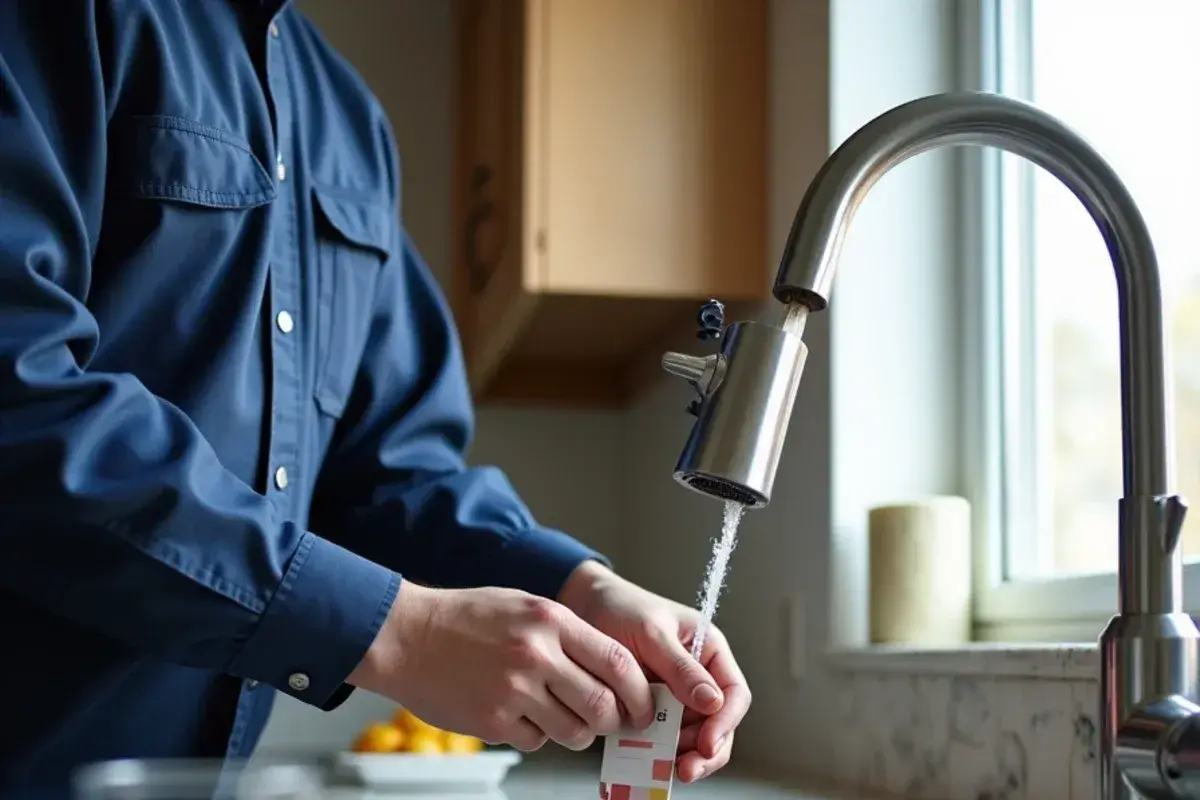
The U.S. Geological Survey calls anything above 180 mg/L very hard, so the two lake-fed plants sit right at the line. A hardness test kit at the kitchen tap will show which end of the range reaches your house. A reading near 19 grains changes the advice that follows.
Water heaters
What does scale do to tank and tankless water heaters?
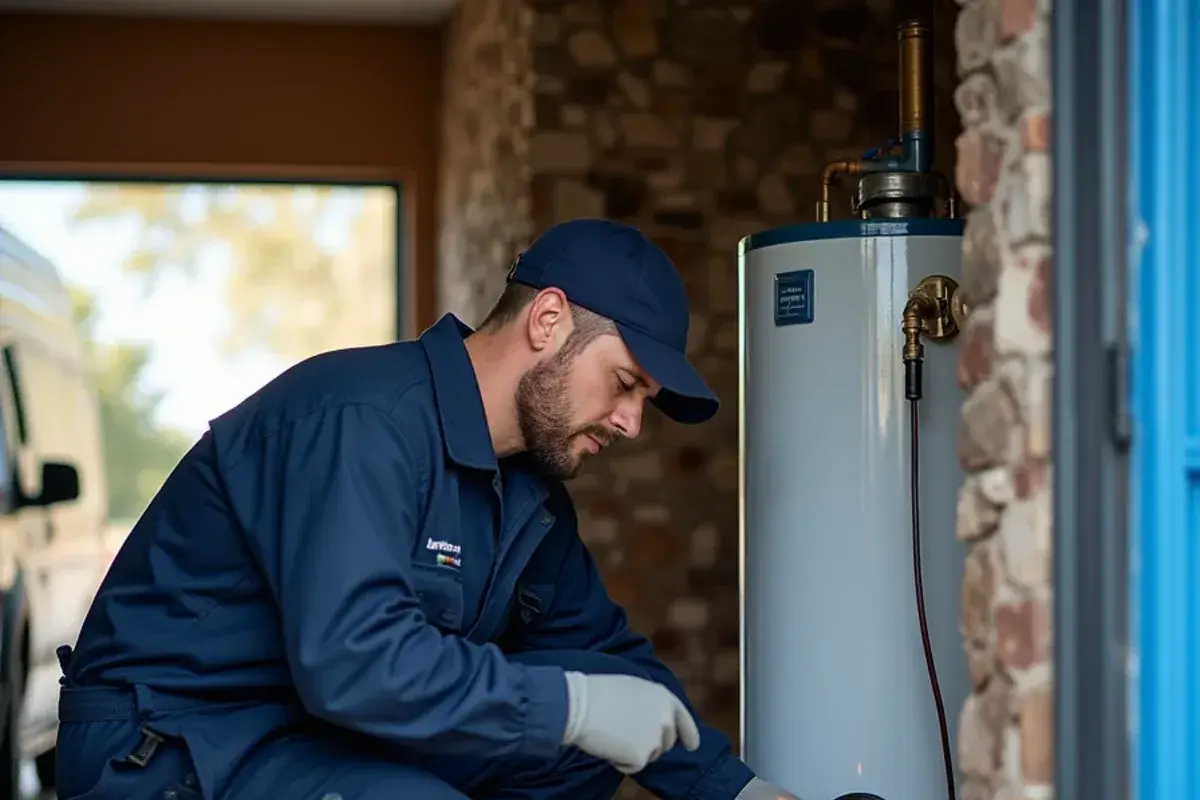
Heat drives calcium out of solution, so the water heater collects more scale than anything else in the house.
In a tank heater, calcium carbonate drops out as the water warms and settles on the bottom. On a gas unit, that layer sits between the burner and the water. Heat has to push through it, so the tank bottom runs hotter and water trapped under the crust boils in little bursts you hear as popping.
Electric tanks suffer differently. The lower element ends up buried in sediment, overheats and burns out, and scale coats the upper element too. Either way, the tank delivers less hot water per hour and wears out sooner than the 10–15 years a storage heater typically lasts.
Tankless units hide the problem better. Scale lines the narrow passages of the heat exchanger, flow drops, the outlet temperature swings and the unit eventually throws an overheat or flow error. On 19-grain water, a tankless heater with no softener ahead of it usually needs descaling more often than the manual’s baseline.
Scale is not always the end of a heater, but it is often the reason a repair turns into a replacement. Our water heater repair visits on hard water start with the drain valve and the sound of the burn cycle. A replacement in the city needs a permit, and we pull it.
Fixtures and appliances
Faucets, toilets and appliances: where the crust shows up first
Anywhere water sits, drips or evaporates, minerals stay behind.
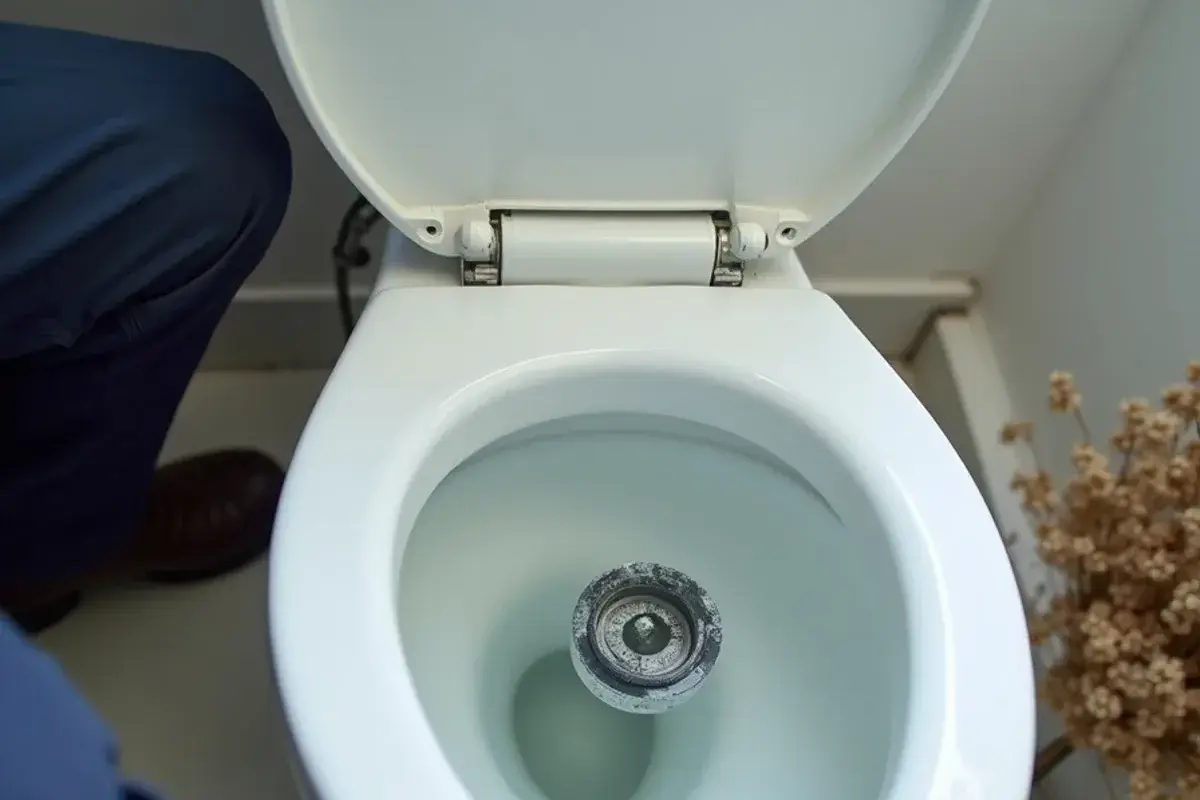
Aerators and showerhead nozzles clog because water speeds up and splashes there, leaving mineral behind each time it dries. Cartridge faucets grow stiff as scale builds on the seals. Toilet fill valves and flappers stop sealing, which shows up as a tank that refills on its own every few minutes.
Appliances take a slower hit. Dishwashers leave cloudy glasses, ice makers clog at the inlet valve, and washing machine inlet screens fill with grit. Glass shower doors haze over within days of cleaning.
Signs scale is costing you more than spotty glasses
- Showerheads that spray sideways or lose pressure within a few months
- A toilet that hisses or refills without being flushed
- Faucet handles that turn stiffly or drip after closing
- White crust at the water heater drain valve or relief-valve outlet
- A tankless unit that runs lukewarm at the same flow it used to handle
- Ice maker or dishwasher fill problems with no other fault found
Expert insight
Softener, conditioner or neither at 10 versus 19 grains?
The honest answer changes with the number on your test kit.
At 10–11 grains, plenty of households live without a softener and simply clean aerators, descale a tankless unit on schedule and flush the tank heater. At 19 grains, scale builds fast enough that most homeowners who keep the house long term end up treating the water.
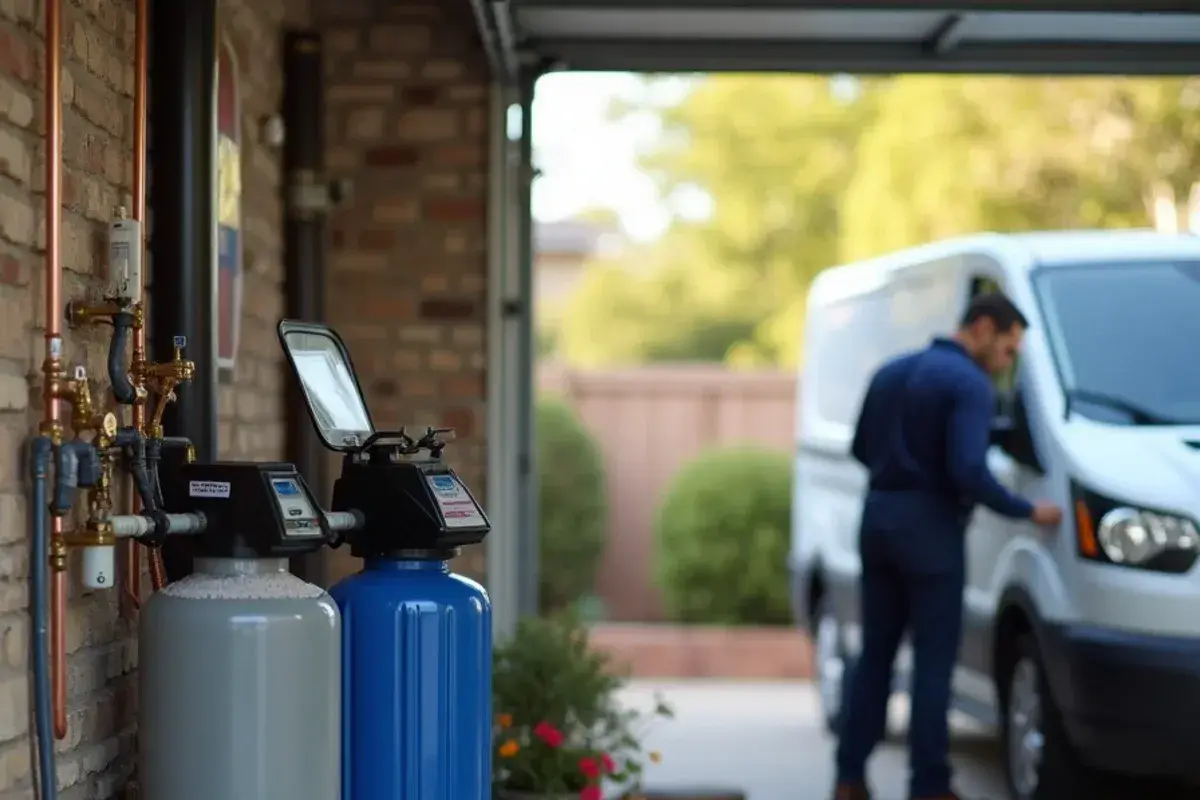
A salt-based water softener is the only common option that actually removes hardness. It swaps calcium for sodium, adding roughly 8 mg/L of sodium per grain removed. Fully softened 19-grain water therefore carries about 150 mg/L of added sodium, which is why many installs leave a cold, unsoftened line at the kitchen tap.
| Question | About 10–11 gpg | About 19 gpg |
|---|---|---|
| Scale on fixtures | Steady, manageable with cleaning | Fast, visible within weeks |
| Tankless descaling | On the maker’s schedule | More often without a softener |
| Softener regeneration | Less frequent | Nearly twice as often for the same use |
| Salt-free conditioner | Reasonable for scale reduction | Less proven at this hardness |
Softeners have their own hard-water problems. Salt can bridge into a crust above the brine, the control valve wears, and an undersized unit regenerates so often it wastes salt and water. Salt-free conditioners change how scale forms rather than removing it, and extension researchers still describe them as emerging technology.
Maintenance
A yearly hard-water routine for the house
Most of the damage above is preventable with an hour or two of upkeep a year.
Test the water once
Use a hardness kit at an unsoftened tap so you know whether you are near 10 grains or near 19. Every other setting depends on that number.
Flush the tank heater
Shut off the gas or breaker, close the cold supply, and drain through a hose until the water runs clear. Refill fully before restoring power.
Descale the tankless unit
Close the isolation valves, circulate a descaling solution through the service ports with a small pump, then flush with fresh water and clean the inlet screen.
Soak aerators and showerheads
Unscrew them and soak in white vinegar overnight. Replace any that stay crusted, and check toilet fill valves for slow refills while you are at it.
Check the softener
Break up any salt bridge, confirm the hardness setting matches your test, and make sure the unit actually regenerates on its programmed night.
Beyond city water
Wells west of I-35: Liberty Hill and rural Williamson County
Outside city mains, the water can be harder still, and it changes from well to well.
Across Williamson County, I-35 is the rough dividing line. West of it, the ground is Edwards limestone over the Edwards Aquifer, and water that moves through limestone picks up calcium on the way. That is the geology behind the hard water on both city and private systems.
Out on SH 29, many rural lots around Liberty Hill run on private wells, and that well water is often very hard. Those homes call about softeners, pressure tanks and water heaters more than anything else. A well also has no utility report, so a lab test for hardness and iron should come before any softener is sized.