

Cost
What drives slab leak repair cost?
Two homes with the same pinhole leak can end up with very different bills. These are the reasons.
Slab leak repair cost in Texas is set less by the leak itself than by everything around it. A pinhole in a copper line is a small fix once you can reach it. Getting to it, and putting the house back afterward, is where most of the work sits.
| Factor | Why it matters |
|---|---|
| Detection | A quick meter-and-pressure test is one thing; pinpointing a leak under a large tiled area with acoustic and thermal tools takes longer. |
| Location | A leak near an outside wall can be reached from the yard. One under a kitchen island or a shower pan is harder. |
| Repair method | Spot repair through the floor, a tunnel from outside or a reroute through the attic each carry different labour and materials. |
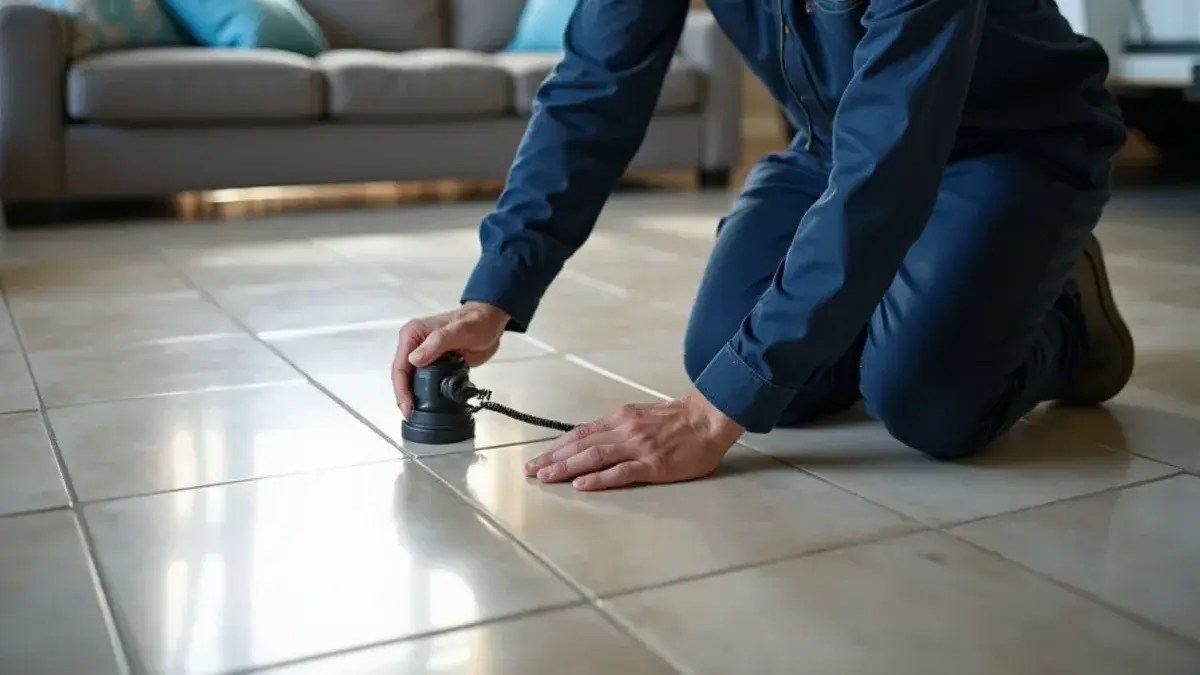
| Flooring | Carpet folds back. Tile, stone and site-finished wood must be cut, matched and replaced, often by another trade. |
| Walls and insulation | A reroute opens drywall for new drops and disturbs attic insulation that should be restored. |
| Permits | Reroutes and repipes need a city permit and inspection in Georgetown and most nearby cities. |
| Water damage | A leak that ran for months may need drying, baseboard and drywall work before anything is closed up. |
Pipe material matters too. Older copper under a slab tends to fail in more than one place over time, which tilts the choice toward a reroute. A single leak in newer PEX at a fitting is more likely to be a one-off.
Finding it
How is a slab leak found, and why does detection show up on the bill?
Nobody can price a repair before the leak is located to within a few feet.
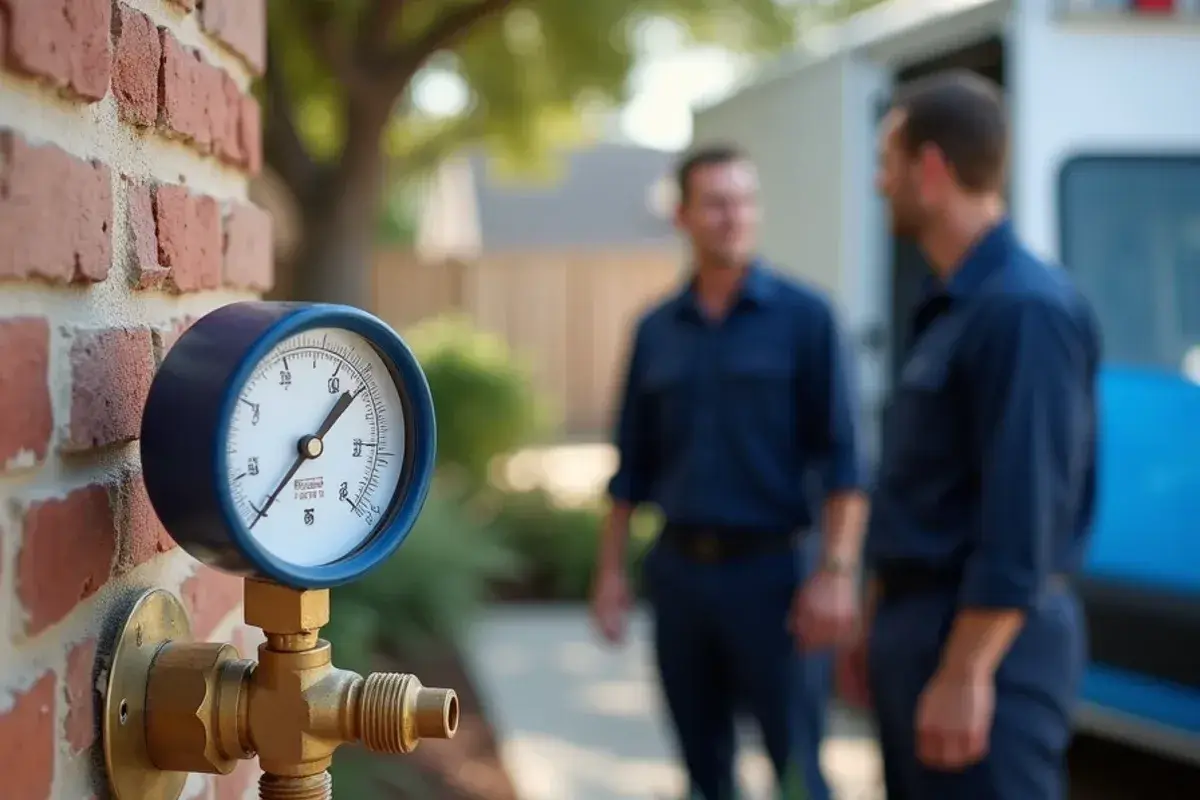
Proper leak detection narrows things down in stages. First the meter: with every fixture off, a moving leak indicator confirms water is escaping somewhere. Then the hot and cold sides are isolated and pressure-tested, so the plumber knows which system is losing water.
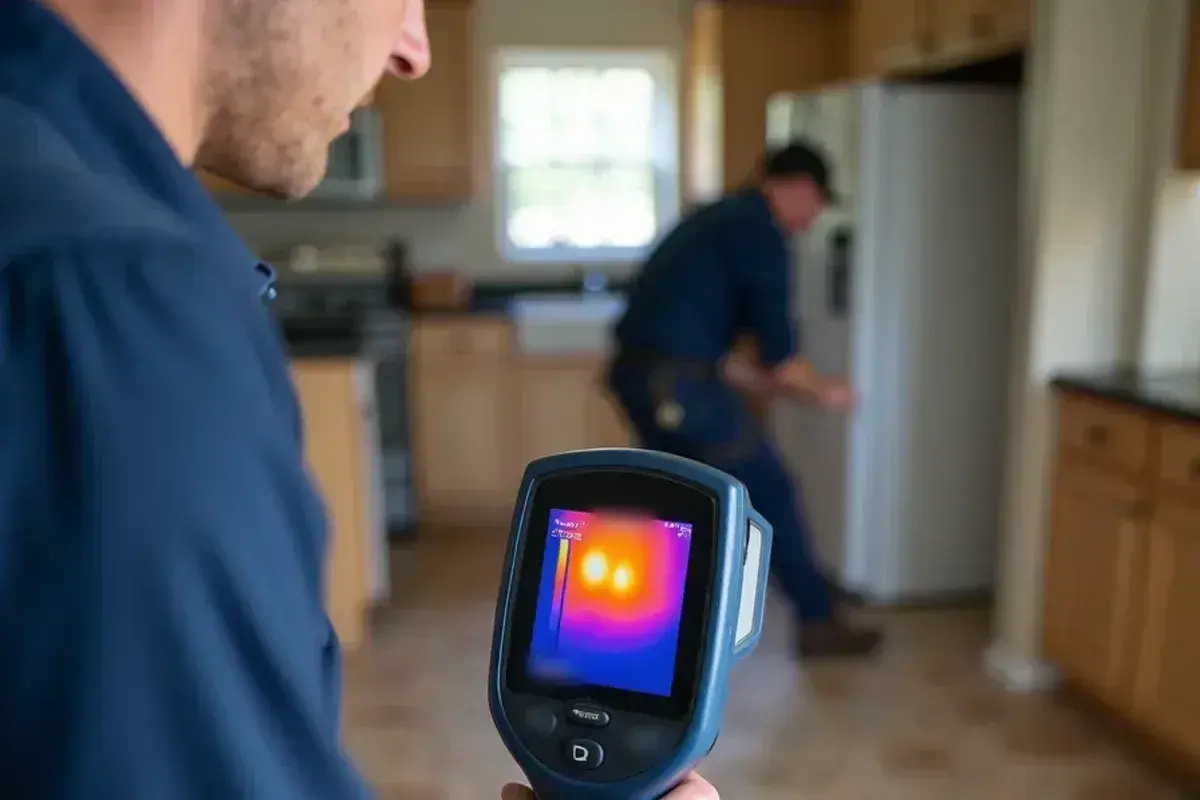
Next comes pinpointing. Acoustic sensors listen through the floor for the hiss of water leaving a pipe. A thermal camera picks up the warm spot that a hot-water leak leaves on tile or concrete. Line tracing maps where the pipe actually runs, which rarely matches a guess.
Drain lines under the slab are a different test. They are not under pressure, so plumbers use a camera and a water test of the drain system instead. On shifting clay, drain leaks are common and easy to miss.
From the trade
Spot repair, tunnel or reroute: the honest trade-offs
Each method is right for some homes and wrong for others. The best choice depends on the pipe’s age as much as the leak.
| Method | What it involves | Best when | Downside |
|---|---|---|---|
| Spot repair | Open the floor and slab over the leak, repair, re-pour | One leak in sound pipe under easy flooring | Breaks the floor; old copper may leak again |
| Tunnel | Dig under the slab from outside | Leak near an outside wall, or irreplaceable flooring | Slow in clay; backfill must be well compacted |
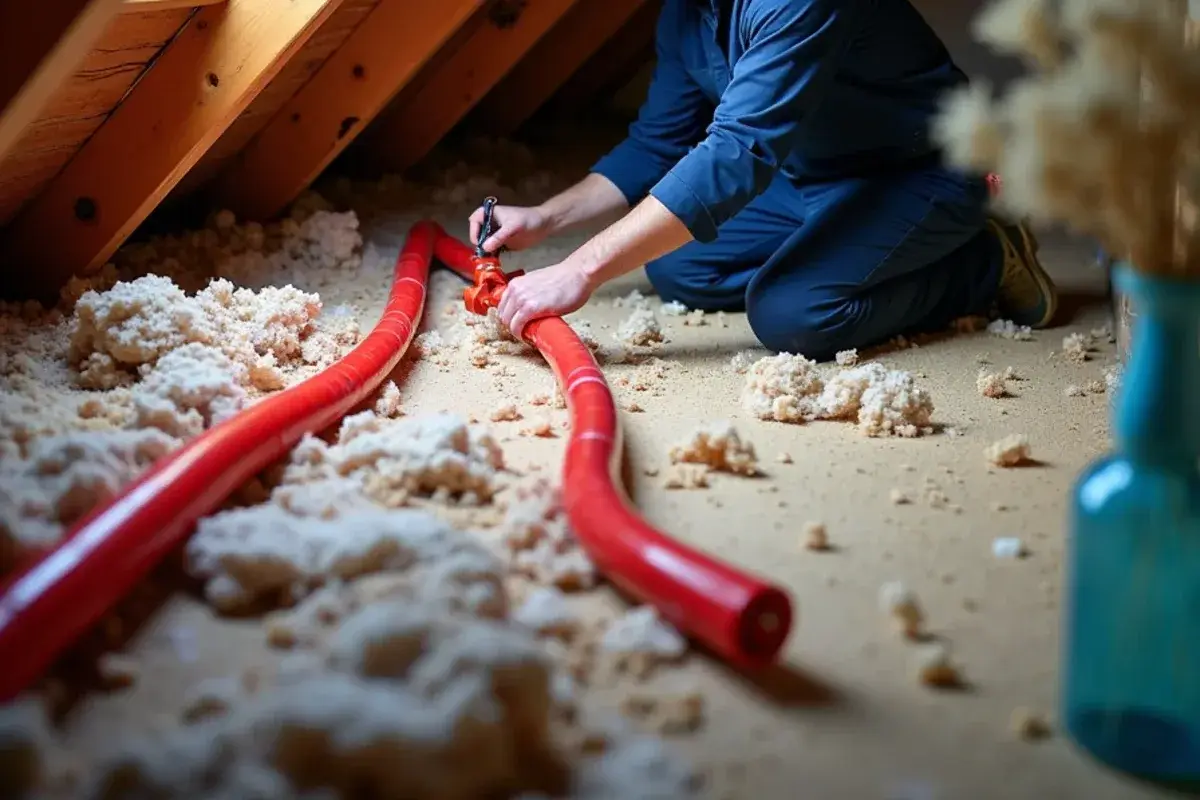
| Reroute | Abandon the buried line; run new pipe overhead | Older copper, repeat leaks or a hard-to-reach spot | Drywall patches, attic work and a permit |
Hot lines fail more often than cold ones. Hot copper expands and contracts every time someone showers, and where it rubs on concrete or rebar it wears through. That is why the first sign is so often a warm spot on the floor or a water heater that never stops running.
Speed matters too, because a house may have no water until the leak is fixed. One of our Google reviewers described exactly that. "We were without water over super bowl weekend due to a hot water leak under the slab near the master bathroom shower."
Our approach to slab leak repair is to show you both realistic options with prices, on site, before work starts. If a reroute costs more today but retires a line likely to leak again, you should hear that plainly.
Local soil
Why clay-soil slabs in Hutto and Pflugerville leak
East of I-35, the ground under the house moves every season.
The Blackland Prairie clay that runs east of I-35 swells when it gets wet and shrinks when it dries. A slab on that clay rises and settles slightly through the year. Pipes cast into or under the slab have to move with it, and joints are where that stress shows first.
Nearly all of Hutto was built from the 2000s onward as production homes on that heaving clay. Many are now old enough for a first slab or drain-line problem. In Pflugerville, subdivisions from the 1980s through the 2010s sit on the same soil, and slab movement there tends to crack drain lines.
There is a practical point for both towns. If a foundation repair company is about to level the house, have the plumbing pressure-tested before and after. Lifting a slab can open a joint that was fine the day before.
Insurance
Will homeowners insurance pay for a slab leak in Texas?
Sometimes for the damage, rarely for the pipe, and it depends on your policy wording.
The Texas Department of Insurance says most homeowner policies cover sudden and accidental water damage, but usually not damage from gradual leaks or seepage. Slab leaks are tricky because many run for weeks before anyone notices. How your insurer classifies yours drives the outcome.
TDI’s home insurance guide lists damage to foundations or slabs as an optional endorsement rather than standard coverage. One slab endorsement approved by TDI order covers tearing out and replacing part of the building to reach the leak, but not the pipe that leaked. Look for wording like that in your own policy.
Questions to ask your agent
- Does my policy have a foundation or slab endorsement, and what is its limit?
- Does it pay to tear out and replace flooring to reach the pipe?
- Is the pipe repair itself excluded?
- How does my policy treat a leak that ran for some time before I found it?
- What deductible applies to a water claim?
TDI notes that hidden water damage usually must be reported within days of first seeing it. Photograph the damage before repairs, keep receipts and make only temporary repairs until the adjuster visits. This is general information, not legal advice, so read your own policy.