

Right now
What should you do the moment sewage comes up in the tub?
Sewer backup, what to do first: stop adding water, then find where the line is blocked.
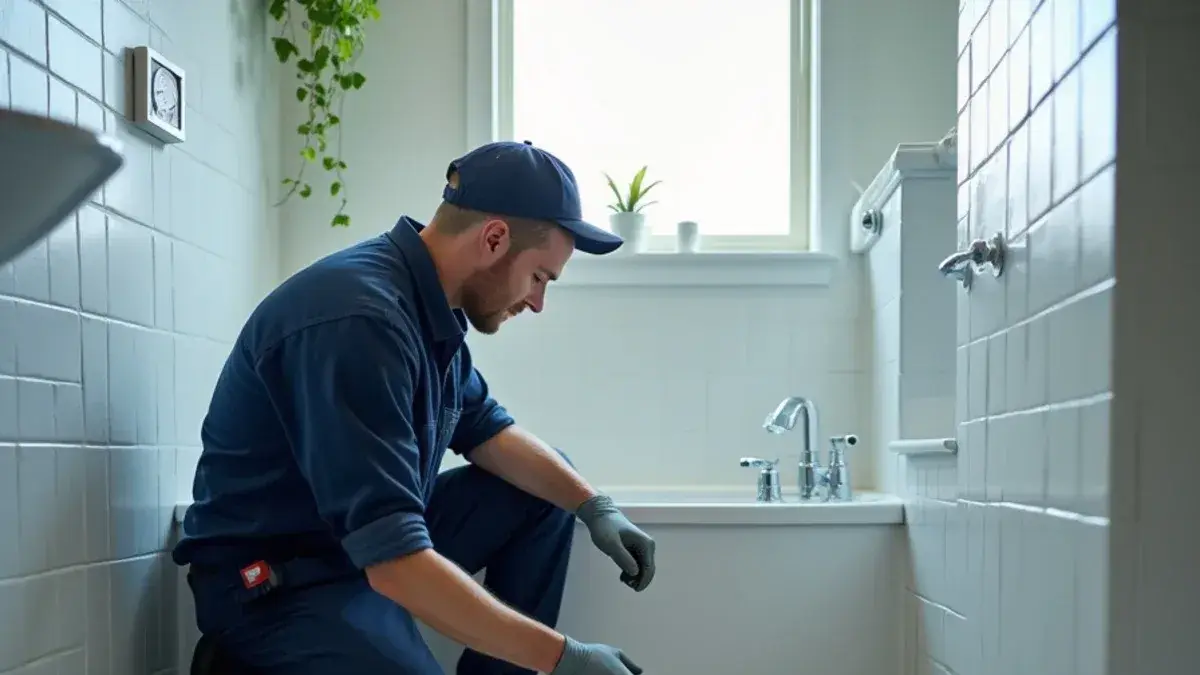
When the main drain line plugs, wastewater has nowhere to go but up. It surfaces at the lowest opening in the house, which on a slab home is usually a ground-floor tub, shower or floor drain. A toilet flush upstairs can push it over the rim.
Stop all water use
No flushing, no showers, no laundry. Turn off the dishwasher and washing machine mid-cycle, and tell everyone in the house so nobody runs a sink out of habit.
Keep people and pets out
Sewage carries bacteria and viruses. Close the bathroom door, keep children and animals away, and wear rubber gloves and boots if you must go in.
Find the outdoor cleanout
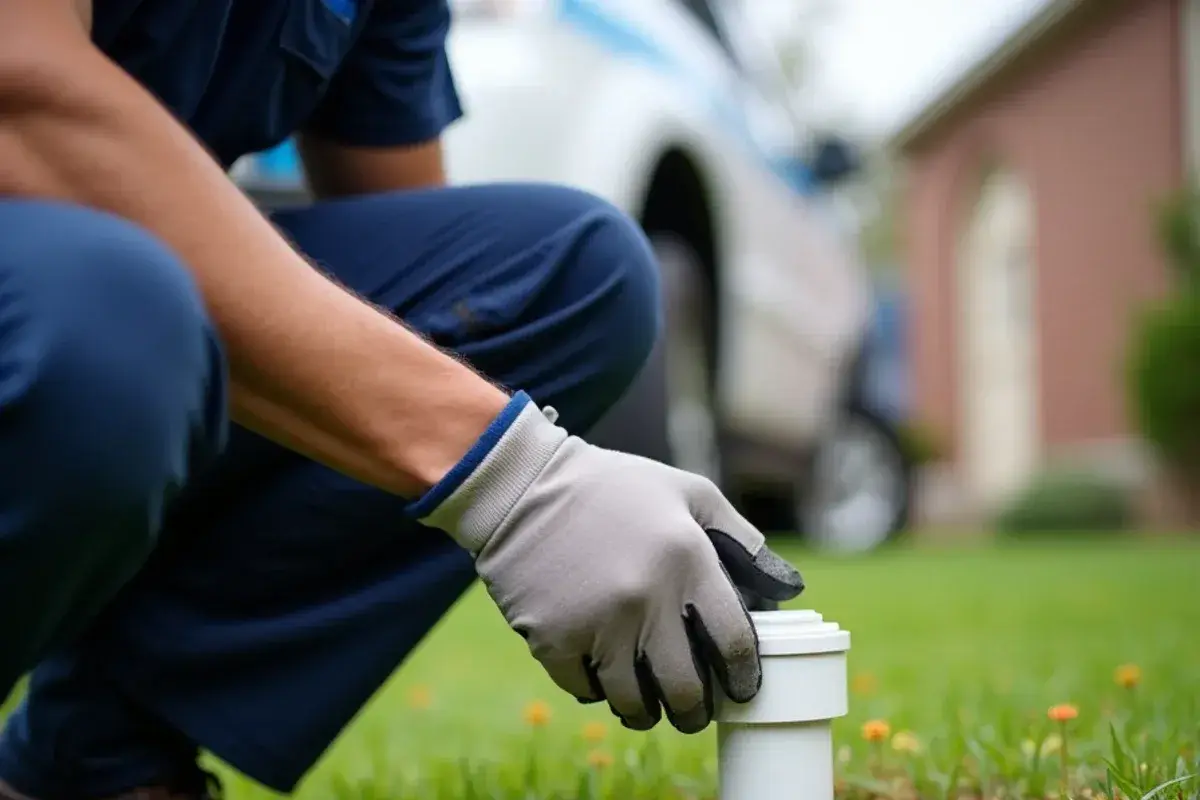
Look for a capped three- or four-inch pipe sticking a few inches out of the ground, usually near the front or side foundation. Unscrew the cap slowly and stand to one side.
Read what the cleanout tells you
If sewage rises out of the cleanout, the blockage is downstream, toward the street. If the cleanout stays empty and the house drains slowly, the clog is in the pipe under or inside the house.
Call the right people
A suspected city main problem goes to the city wastewater line. A blockage in your own service line goes to a plumber for drain and sewer cleaning.
Document before you clean
Photograph the tub, floors and any soaked baseboards or rugs. Note the time it started and which fixtures were running.
Whose pipe is it?
Is the blockage in your line or the city main?
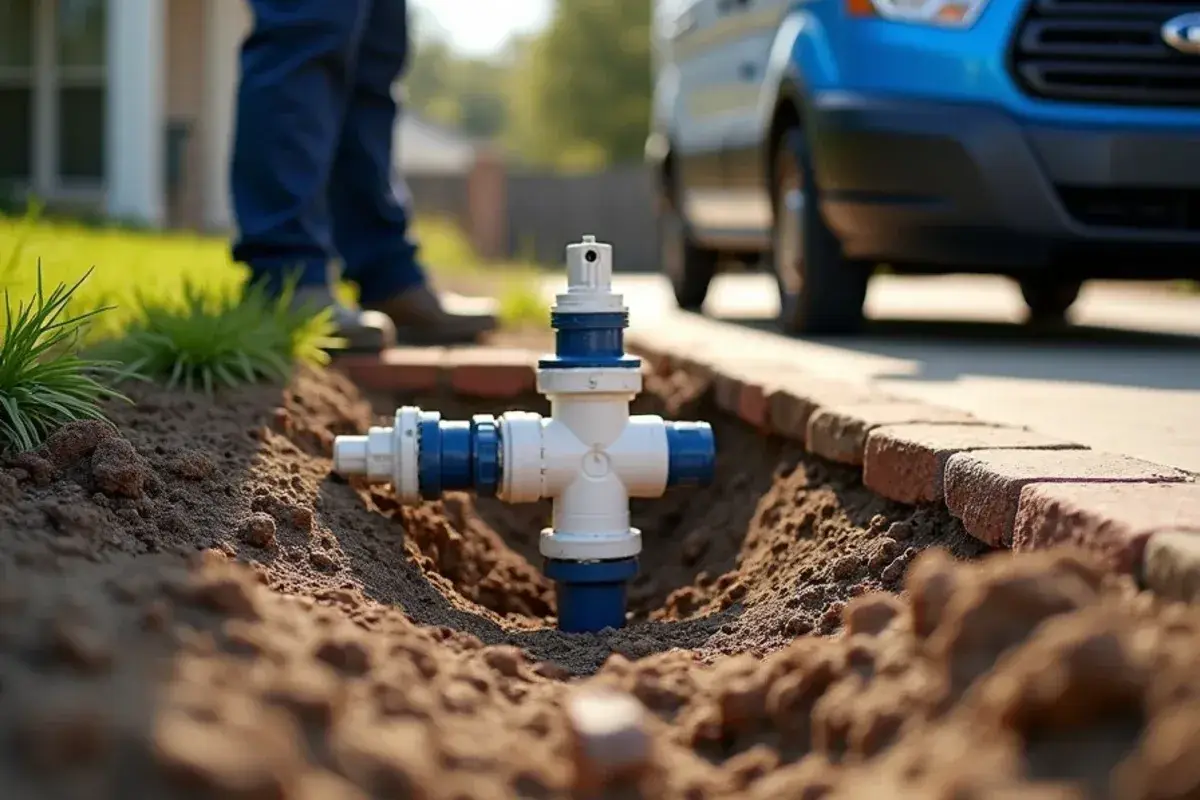
In most cities the main under the street is public, and the service line from the house to the main is the owner’s.
The cleanout is the dividing test. The City of Hutto tells residents to turn off the dishwasher and washer, stop flushing and remove the outside cleanout cap. If water keeps overflowing from the cleanout, the city says its main may be blocked. If the flow stops, the problem is most likely the line between the home and the street.
That matters because the call goes to different places. Hutto posts a wastewater number for sewer backups on its city website, so save it now. Once the city has cleared its main, plumbing in Hutto covers the private side.
The City of Taylor lists 512-352-3251 for emergency sewer problems. Early-1900s homes around historic downtown often still drain through cast iron, so it is worth knowing where the cleanout sits before you need it. If yours has no cleanout, a plumber can add one during the repair. See plumbing in Taylor for the older-home side of the job.
Elsewhere, check your city’s or MUD’s utility page now and save the wastewater number in your phone. Where the city’s responsibility ends varies, and some utilities draw the line at the property line or the cleanout.
From the trade
What really blocks a main line in clay-soil and cast-iron homes
Clearing the clog gets you the toilet back. Finding why it formed keeps it from coming back next month.
East of I-35, Blackland Prairie clay swells after rain and shrinks in a dry August. Drain lines under and beside the slab move with it. Over years a section can sag into a belly, where water stands and solids settle, so the same spot clogs again and again.
Older cast iron fails from the inside. Corrosion builds rough scale that snags paper and grease, and joints open enough for roots to find water. Newer PVC lines in production homes have smooth walls, so their backups lean toward wipes, grease and bellies rather than scale.
| Cause | Typical clue | Usual fix |
|---|---|---|
| Wipes, paper or grease | Backup after heavy use or a holiday meal | Cable through the cleanout, then a camera check |
| Tree roots at a joint | Slow drains returning on a cycle, worse in summer | Cut the roots, then repair or line the joint |
| Belly from soil movement | Clogs in the same spot, standing water on camera | Excavate and re-slope that section |
| Scaled or broken cast iron | Flakes of rust in the cable, repeat clogs | Descale where sound, replace where it is not |
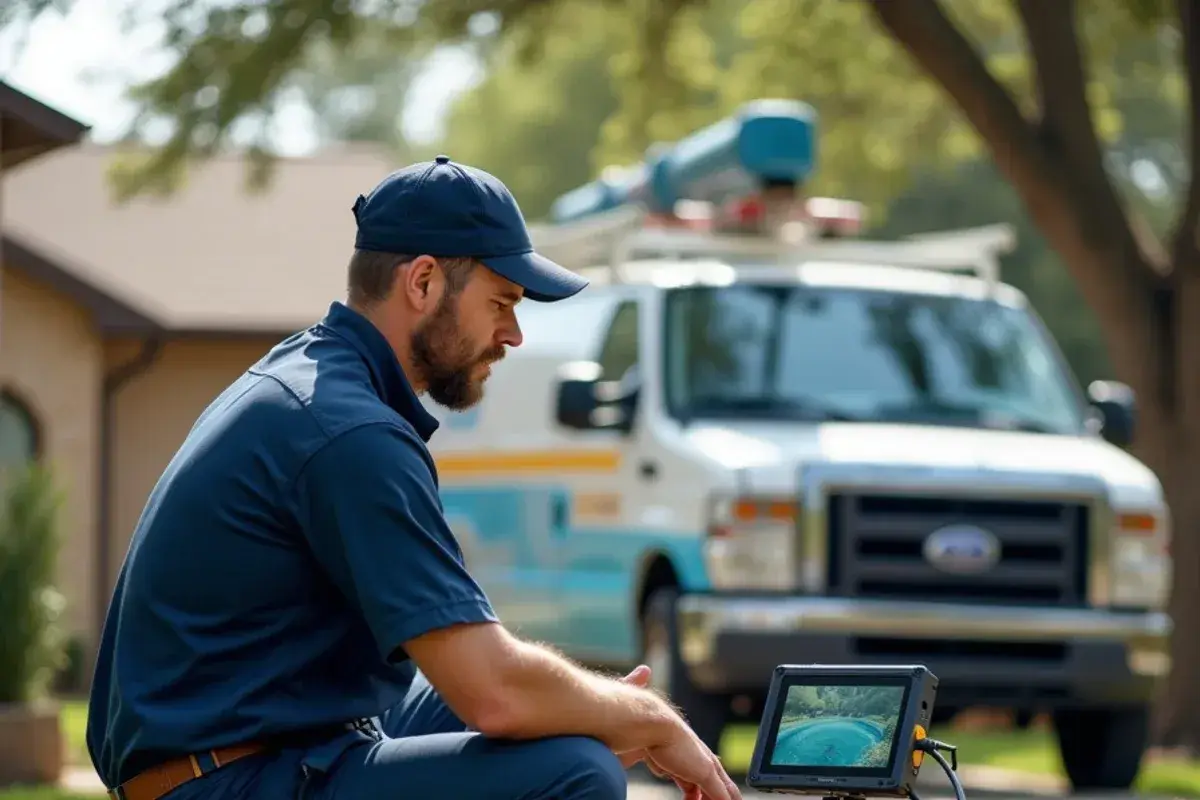
The honest trade-off is between a quick clear and a diagnosis. A cable opens the line in most cases, but it cannot show a belly or a cracked hub. A camera run afterward tells you whether you need sewer line repair or just better habits.
One of our Google reviewers summed up how a main-line clog feels: "Our main sewer clogged up, meaning no water, toilet, nothing."
Cleanup
How do you clean up sewage safely?
Treat anything sewage touched as contaminated. Water from a toilet or main drain is not the same as a clean-pipe leak.
Small backups confined to a tub or tile floor can be handled with care. Large ones that soaked carpet, drywall or a cabinet base are usually a job for a water-damage restoration company. Either way, wait until the line is cleared before you start.
Sewage cleanup checklist
- Wear rubber gloves, boots and eye protection, and keep children and pets out
- Open windows and run fans pointed outward to move air
- Bag and discard soaked rugs, carpet pad and cardboard after photographing them
- Cut out wet drywall about a foot above the waterline rather than trying to dry it
- Wash hard surfaces with detergent, rinse, then disinfect with a diluted bleach solution
- Never mix bleach with ammonia or other cleaners
- Wash your hands and launder work clothes separately when you finish
Skip chemical drain openers. They rarely reach a main-line clog, they sit in the pipe as a hazard, and they splash on whoever opens the cleanout next.
Insurance
Does homeowners insurance pay for a sewer backup in Texas?
Often only if you added it. Check before you need it.
The Texas Department of Insurance lists "backup of sewers or drains" among the optional endorsements you can add to a home policy. In other words, a standard policy may not include it. TDI also notes that flood damage needs a separate flood policy.
TDI advises telling your insurer as soon as possible, photographing damage before repairs and keeping damaged items until the adjuster has seen them. Read your own declarations page for a water or sewer backup endorsement and its limit. This is general information, not legal advice.
Ask the plumber for a short written note on the cause, such as roots, a belly or a city main blockage. Adjusters ask that question first.