
The usual suspects
What are the most common commercial plumbing problems?
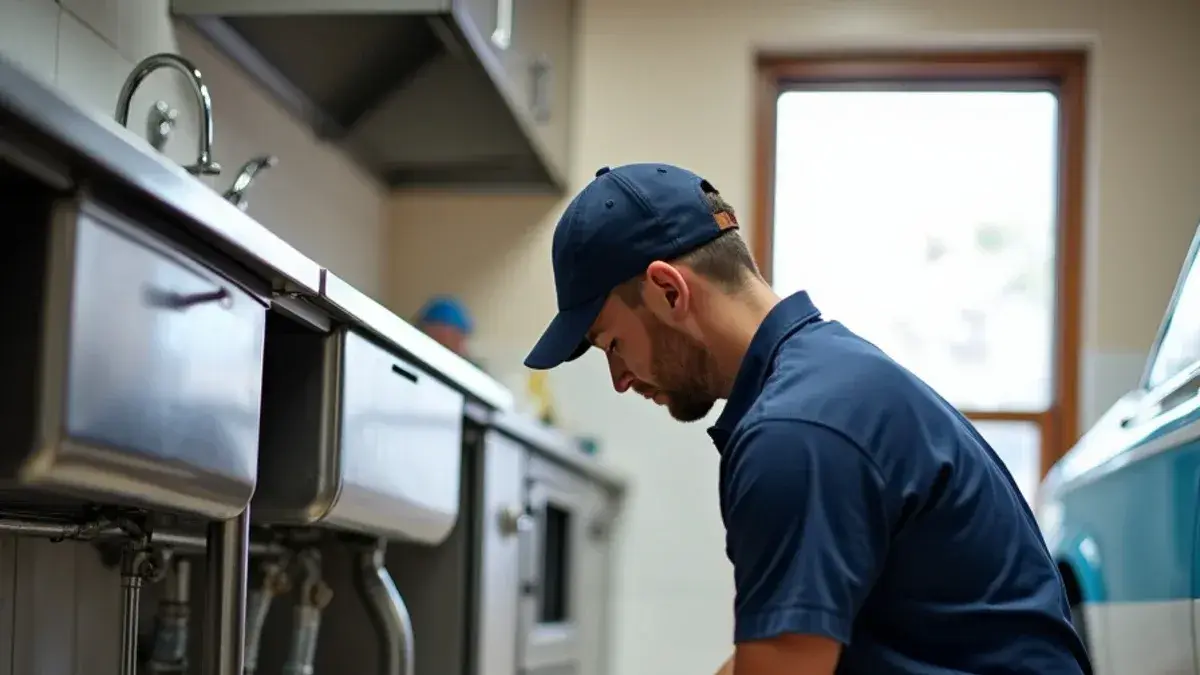
A business uses its plumbing harder than any house, and more people use it who do not care how it works.
A restaurant line might drain a three-compartment sink, a dish machine and a mop sink for twelve hours straight. An office restroom sees more flushes in a day than a family toilet sees in a month. The failures follow that load, and most of them give a warning first.
| Problem | Early warning | Usual fix |
|---|---|---|
| Grease-clogged kitchen drains | Slow floor sinks, odours at the trap, gurgling at the prep sink. | Clear the line, jet if it is lined with grease, and review the trap schedule. |
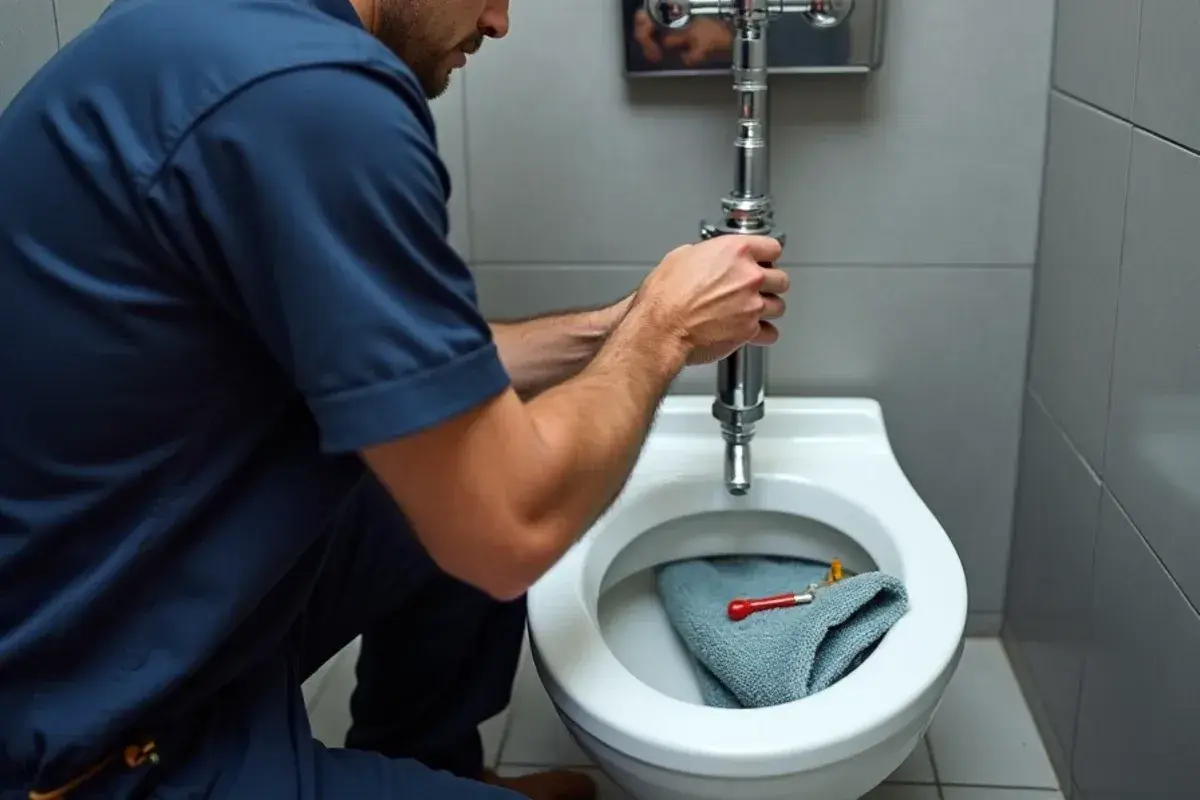
| Worn flush valves and sensor faucets | Urinals that run on, toilets that double-flush, faucets that stay on. | Rebuild or replace the valve diaphragm, cartridge or sensor. |
| Dry floor-drain traps | Sewer gas in a storeroom or restroom with no visible leak. | Refill the trap and add a trap primer or seal. |
| Overworked water heaters | Lukewarm water at the end of a rush, rumbling tanks, rusty water. | Flush scale, check sizing, and replace with a permit when it fails. |
| Cracked drains under the slab | Recurring backups and a camera showing offsets or breaks. | Spot repair or a new section, depending on what the camera shows. |
In older commercial districts the last row comes up most. Around Temple, mid-century buildings in the railroad-era neighbourhoods often still drain through cast iron and clay laterals. Those lines crack and catch grease long before newer PVC would.
Grease traps
Grease traps: what a typical Texas ordinance expects
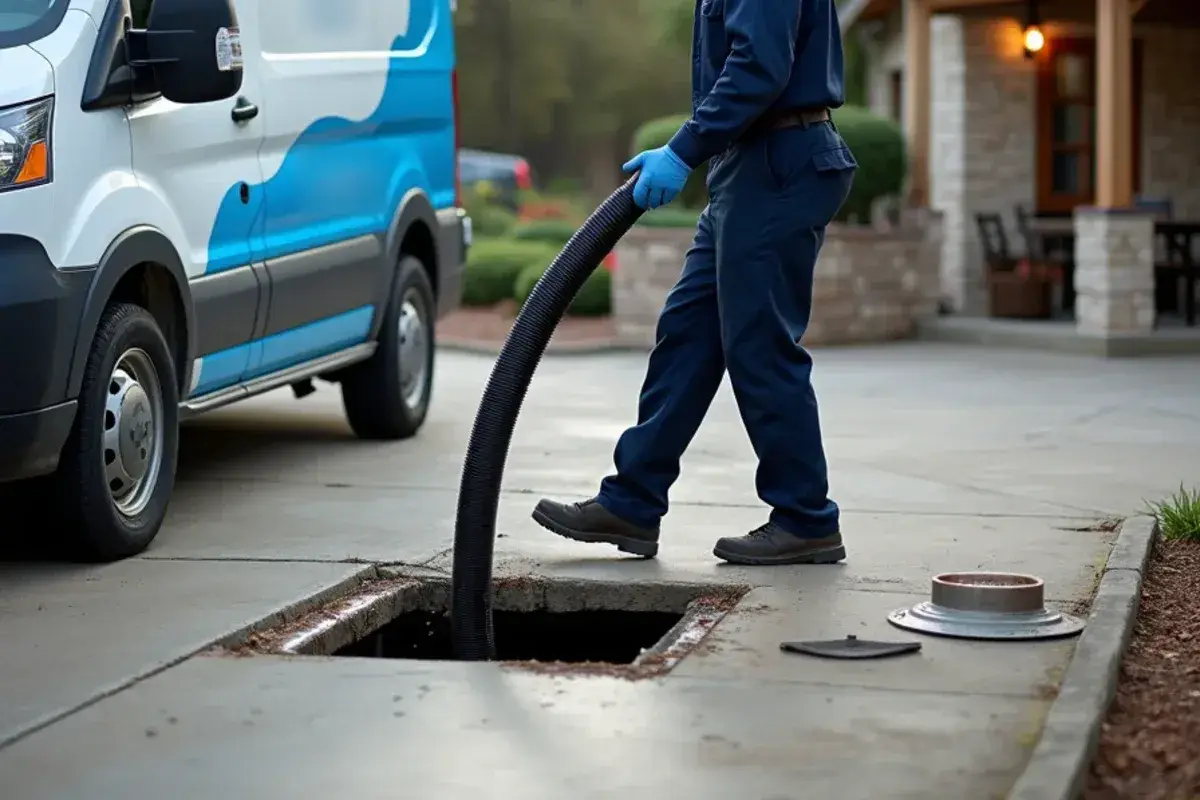
In Texas, cities and their wastewater utilities set grease trap rules, while TCEQ regulates how the waste is pumped, hauled and disposed of.
TCEQ publishes model standards for a grease ordinance, and many Texas cities write their rules from that template. Under the model, any facility that prepares or serves food must install and maintain a trap or interceptor. A new kitchen's trap is inspected before it can open. Homes are exempt.
The model sets a pumping floor of every 90 days, sooner when grease and solids fill a quarter of the trap's wetted depth. A utility can grant a longer interval, but never beyond 180 days. Every pump-out comes with a manifest, and the business keeps its copies for five years.
Your own city's chapter is what counts. Georgetown, for example, rewrote its industrial waste sewer discharge chapter in 2025. Ask the city or your utility for the current text before you set a schedule.
Grease-trap checklist
- Know the trap size, its location and the city or utility rule that applies to it
- Pump the full trap on the required interval, or sooner when it reaches a quarter full
- Use a hauler registered with TCEQ and keep every manifest on site for five years
- Keep enzymes, solvents and degreasers out of the trap; the model ordinance treats them as violations
- Scrape plates and wipe pans into the trash before they reach the sink
- Check baffles, lids and the outlet tee at each pump-out
- Jet the line downstream if backups continue after pumping
Backflow
Backflow assemblies: who may test them and how often
A backflow assembly stops dirty water from being pulled back into the drinking supply. Texas sets strict rules on who touches one.
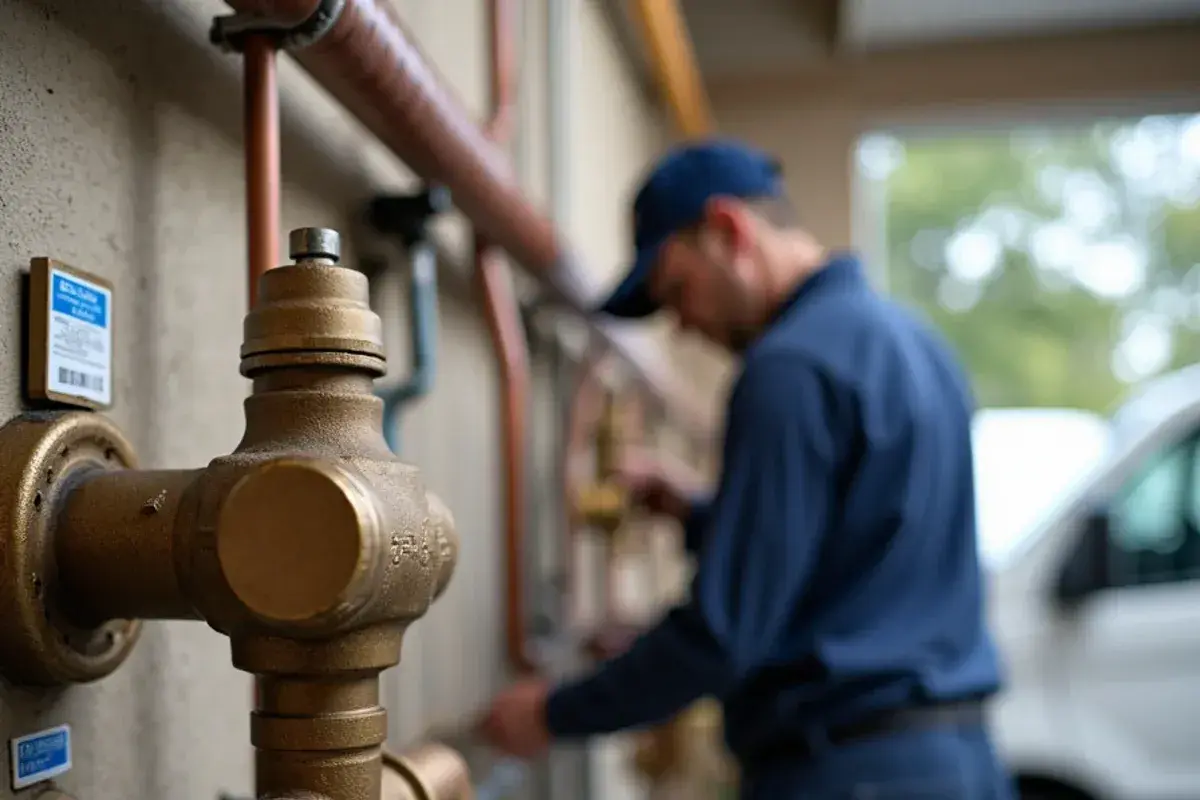
Commercial buildings carry more cross-connection risk than homes: soda machines, boilers, chemical dispensers, irrigation and fire sprinklers. Your water supplier decides which assemblies a property needs, often a reduced pressure assembly on the higher-hazard lines.
Under TCEQ rules, every assembly must be tested when it is installed. Assemblies protecting against a health hazard must be tested again at least once a year. The tester records results on TCEQ Form 20700 and sends the signed original to the public water supplier.
Who does the testing matters. TCEQ requires anyone who tests or repairs a backflow prevention assembly to hold its Backflow Prevention Assembly Tester license. A plumbing call does not substitute for that test, so book a tester who holds the license and ask for the Form 20700 copy.
Backflow checklist
- List every assembly on the property, with its type, size and location
- Find out from your water supplier which ones need an annual test and when it is due
- Book a tester who holds a TCEQ Backflow Prevention Assembly Tester license
- Keep each signed Form 20700 with your building records
- Protect above-ground assemblies from freezing and from vehicle damage
- Have any replacement assembly tested on installation, as the rules require
Expert insight
Why one clog costs a business more than a house
At home, a stopped drain is an inconvenience. In a kitchen or a shared building, it is lost trade and sometimes a health inspection.
The biggest cost is usually the closure, not the repair. A floor sink backing up during lunch service stops the kitchen. A restroom out of order can stop a clinic or a store. That shifts the maths toward planned work done before trading hours.
Multi-tenant buildings add a layer. One restaurant's grease can back up into the retail unit next door, and one main shut-off may serve the whole strip. Along retail corridors such as La Frontera in Round Rock, the first question on a call is which tenants share the line. The second is where each one's isolation valve sits.
The honest trade-offs are about depth. Pumping the trap does nothing for grease already stuck in the line beyond it, and jetting the line does nothing if the trap is overdue. Enzyme products look like a shortcut, but the TCEQ model ordinance prohibits them in traps because they push grease further down the sewer.
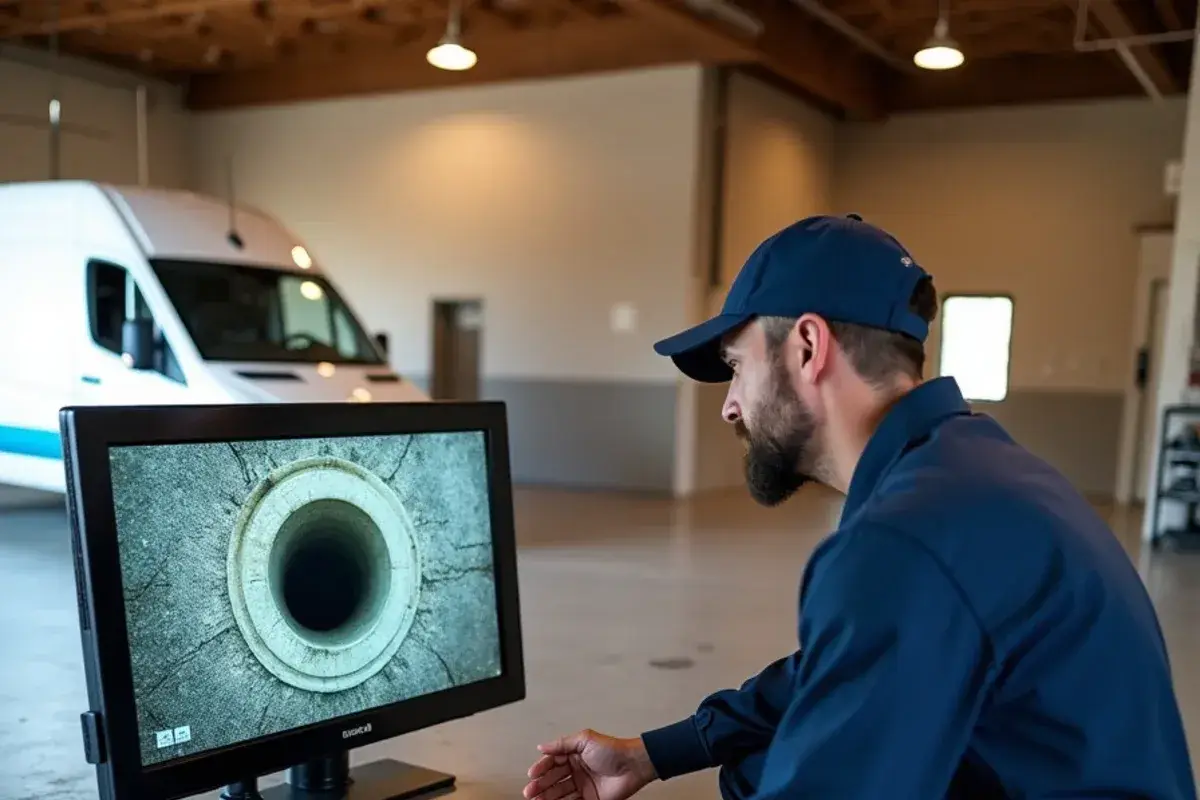
For older buildings, a camera inspection before signing a lease is cheap protection. It shows whether the drain under the slab is sound cast iron, cracked clay or a mix of repairs. One of our longest-standing reviewers manages several commercial centres in Austin and calls us for exactly this kind of work.
Stay ahead
A maintenance calendar that keeps doors open
None of these steps are dramatic. Together they move problems from a busy Friday to a quiet Tuesday morning.
Weekly
Pour water into rarely used floor drains, check urinals and toilets for running valves, and look under sinks for drips.
Monthly
Walk the kitchen lines for slow floor sinks, check the water heater for leaks or rumbling, and test the relief valve discharge pipe for water.
Every pump-out
File the grease manifest, ask the hauler about baffle condition, and note how full the trap was.
Yearly
Schedule backflow tests with a license holder, flush the water heater, and camera the main line on buildings with a history of backups.
Before any remodel
Plan drain sizes, trap location and water heater capacity with a plumber, and expect a city permit for the plumbing work.
Our commercial plumbing work covers restaurants, offices, clinics and retail spaces, and drain and sewer cleaning handles the grease-lined lines. We quote on site before the work starts, and we pull the permit when a water heater swap or finish-out requires one.