
The bottle problem
Why does a bottle of drain opener so often fail?
Because most clogs are not a single plug. They are a lining that has built up along the pipe for years.
A kitchen line closes slowly. Grease cools on the pipe wall, food fines stick to it, and soap reacts with minerals to form a waxy layer. Around Georgetown the water is hard to very hard, about 10 to 19 grains per gallon by plant. That scale gives everything else a rough surface to cling to.
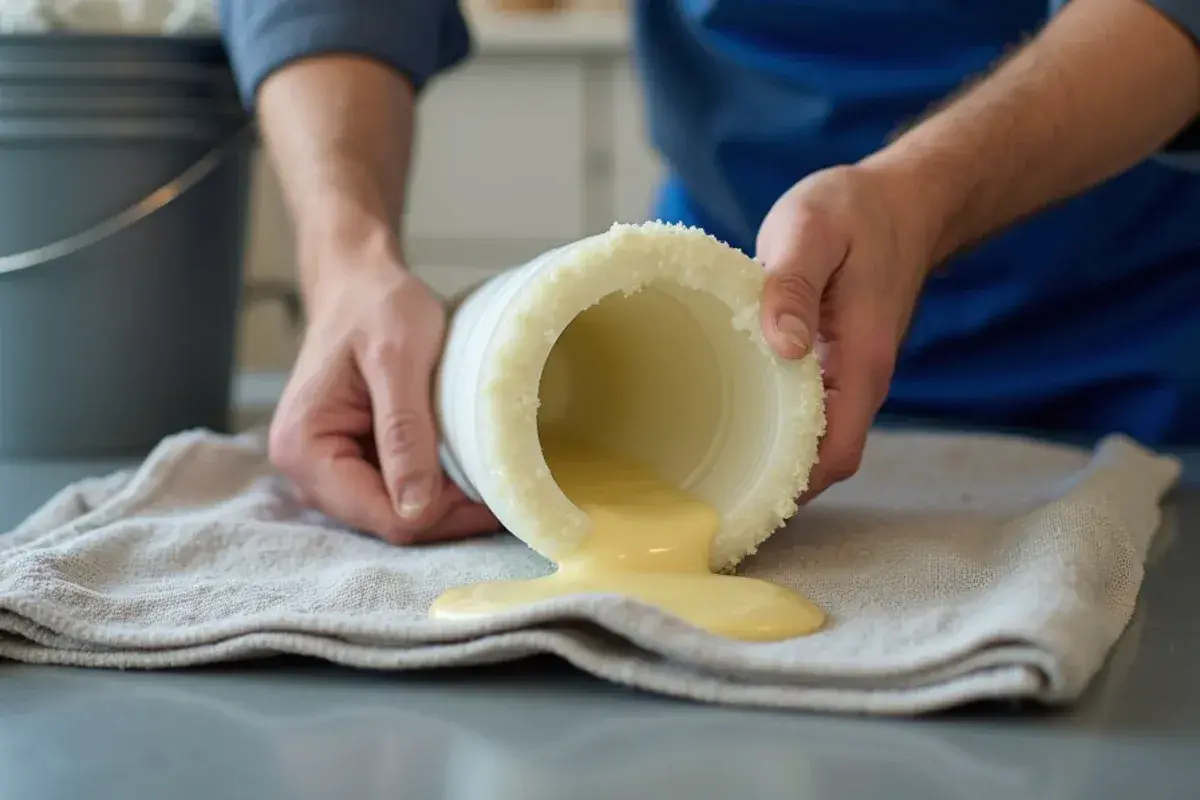
Store-bought openers come in three families. Caustic gels use lye to turn grease into soap. Acid products dissolve hair and organic matter fast and run hot. Oxidising products, usually bleach-based, break down soft organic clogs and do little to grease or scale.
All three work only where they touch. Poured into a standing sink, they sink to the trap and chew a narrow channel through the middle of the blockage. Water drains again for a week, and the lining that caused the problem is still there.
If the opener does not reach the clog at all, the bottle sits in the pipe until someone opens a trap or runs a cable. That person is splashed with whatever is in the line. Tell any plumber what you poured before work starts.
Three methods
Chemical opener, cable snake or hydro-jet: which one fits the clog?
Each tool solves a different kind of blockage. The table shows where each one earns its place and where it does harm.
| Method | What it does | Fits best | Avoid when |
|---|---|---|---|
| Chemical opener | Dissolves soft organic matter where the liquid sits. | A light hair clog in a bathroom sink that still drains slowly. | The fixture is fully stopped, the pipe is old metal, or a plumber may open the line soon. |
| Hand auger | A short cable that hooks or breaks up a plug near the fixture. | Toilet bowls, tub drains and sink traps. | The clog is beyond the first bend or in the main line. |
| Cable machine | A powered cable with cutting heads that bores through and retrieves debris. | Hair, wipes, paper and root intrusions in branch and main lines. | The pipe is badly corroded or collapsed, which a camera should rule out first. |
| Hydro-jet | High-pressure water that scours the full pipe wall and flushes debris downstream. | Grease-lined kitchen lines, scale and sludge, and recurring clogs. | Pipe walls are thin, joints are separated, or the line has not been inspected. |
Most household calls end with a cable. Snaking is fast, it brings debris back for inspection, and it suits the hair and wipes that stop bathroom drains. For a grease-lined kitchen line, though, a cable punches a hole and leaves the walls coated, so the clog returns.
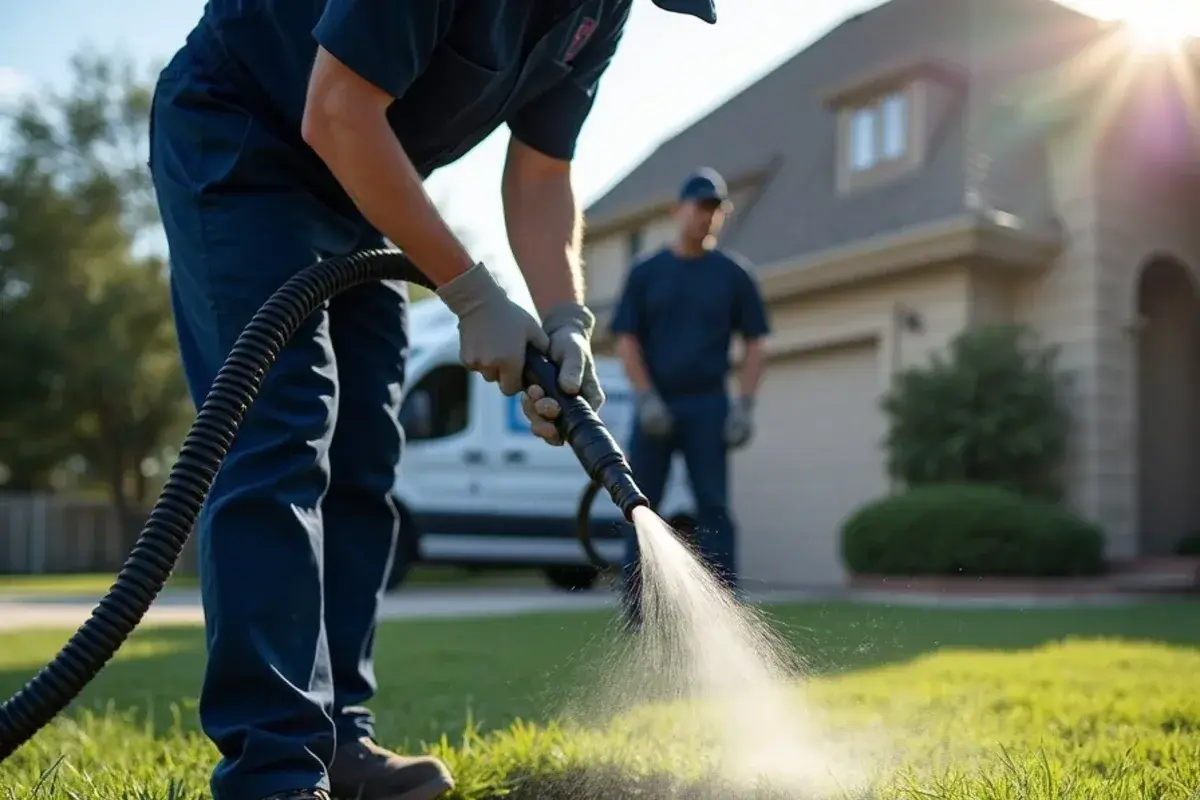
Jetting is the reverse. It cleans the whole circumference of the pipe and leaves the line close to its original bore. It also takes more setup and needs an access point, usually a cleanout, so it suits recurring problems more than a one-off hairball.
Our drain and sewer cleaning service covers both methods plus a camera, so the method follows the clog rather than the other way round.
Expert insight
Pipe material decides the method more than the clog does
Before choosing a tool, a careful plumber asks what the pipe is made of and how old it is.
Cast iron in older slab homes
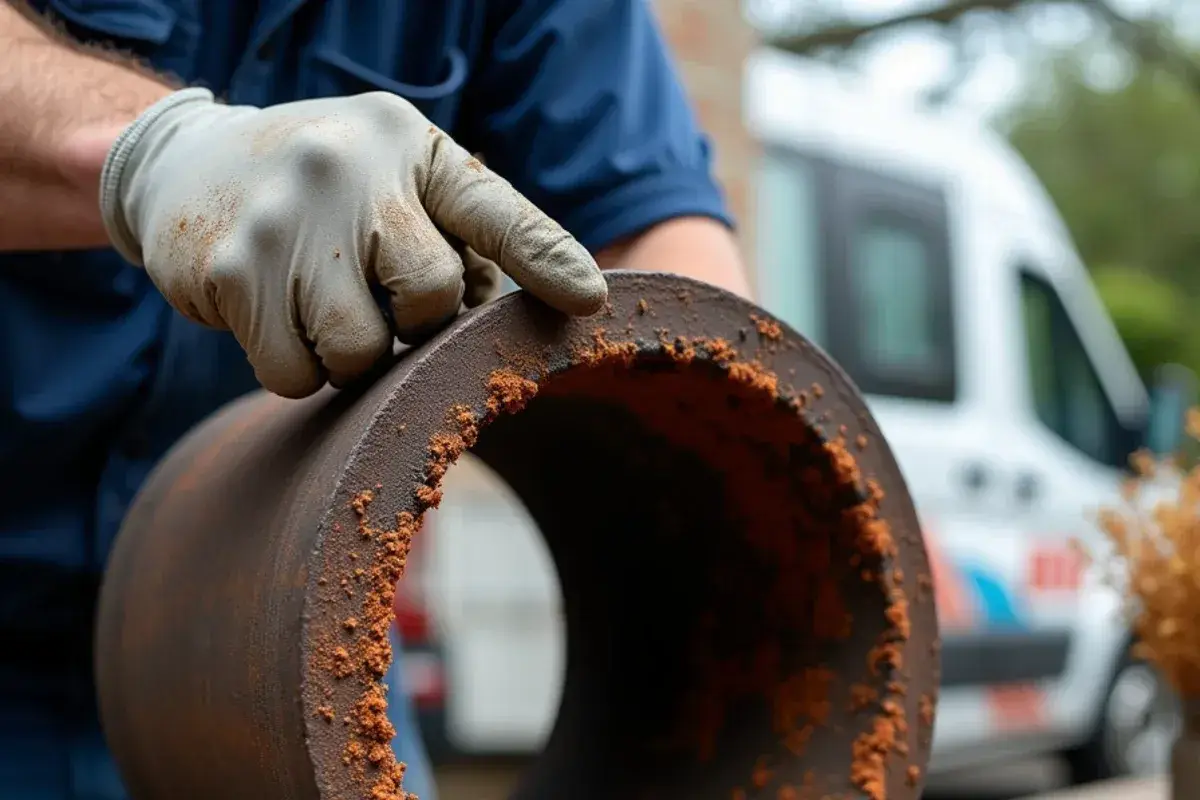
Many houses built through the 1970s still have cast iron drains under the slab. Inside, cast iron rusts into a rough crust called tuberculation, and the bottom of the pipe can thin out. Acid openers speed that corrosion. A jetter at full pressure can punch through a thin spot.
In the Round Rock neighbourhoods west of I-35 that date from that era, we treat original drains as suspect until a camera says otherwise. The usual answer is a cable with a descaling head at moderate speed, then a camera pass to see what is left.
PVC and ABS plastic
Plastic drain lines handle jetting well, which is why a newer house is the best candidate for it. Their weakness is heat and solvent. Some chemical openers react hot enough to soften glued joints and traps, and a cable run too hard can gouge the wall at a tight bend.
Galvanized steel and mixed systems
Older remodels often join galvanized steel, cast iron and plastic in one run. Galvanized drains close from the inside with rust and scale and rarely come back fully with any method. When a line is that far gone, cleaning buys time and a camera shows where replacement should start.
There is also the question of who owns the pipe. In a MUD community such as Brushy Creek, the district runs the public sewer. A homeowner who jets past the property line may be cleaning someone else's main, so we confirm the boundary before sending a nozzle that far.
On the day
What happens during a professional drain cleaning visit?
A drain call follows the same order every time, so the right tool goes into the right pipe.
Questions first
Which fixtures are slow, whether more than one backs up at once, and whether anything was poured in. Two stopped fixtures on different branches usually point to the main line.
Find the best access
A trap arm, a roof vent or an outdoor cleanout. Going in through a cleanout avoids pulling a toilet and keeps the cable away from finished surfaces.
Clear the blockage
Usually with a cable machine and the right cutting head. The debris that comes back on the cable tells us whether it is hair, grease, wipes or roots.
Look inside when the clog keeps returning
A camera run shows sags, offset joints, root entry or a crushed section. That footage separates a cleaning job from a repair job.
Options and a quote before more work
If the line needs jetting or a repair, you hear why and what it costs before anything else happens. We quote on site before the work starts.
Test with real flow
Fill and drain the tub, run the dishwasher or flush several times, then check that nothing gurgles upstream.
Know the signs
When should you put the plunger down and call?
A plunger and a hand auger handle plenty. These are the signs that the problem is deeper.
Call for professional drain cleaning when:
- Two or more fixtures drain slowly or back up at the same time
- The toilet gurgles or the tub fills when the washing machine drains
- The same kitchen sink clogs again within weeks of clearing
- A sewage smell comes from a floor drain or an outdoor cleanout
- You have already poured a chemical opener and the drain is still stopped
- Water appears around the cleanout cap in the yard
A toilet that will not clear with a flange plunger is its own case. Chemical openers do little in a bowl and can crack old porcelain with the heat they release. A closet auger is the right tool, and our toilet and fixture repair team carries one.
A single slow bathroom sink is usually a hair clog at the stopper. Pull and clean the pop-up first. If the water still sits, the trap or the line behind the wall is the next suspect.