
The basics
How does a septic system change what goes down your drains?
On city sewer, a drain sends waste miles away. On septic, everything stays in your yard, and the system only works if bacteria can keep up.
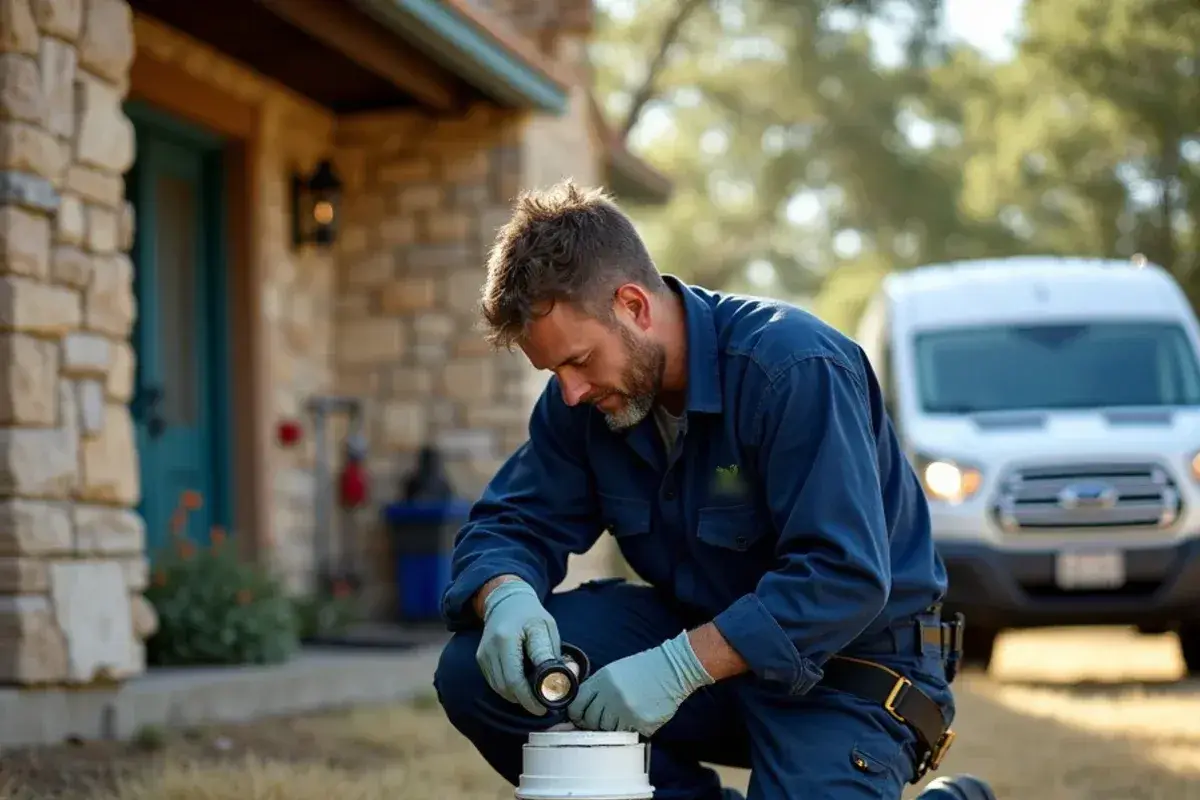
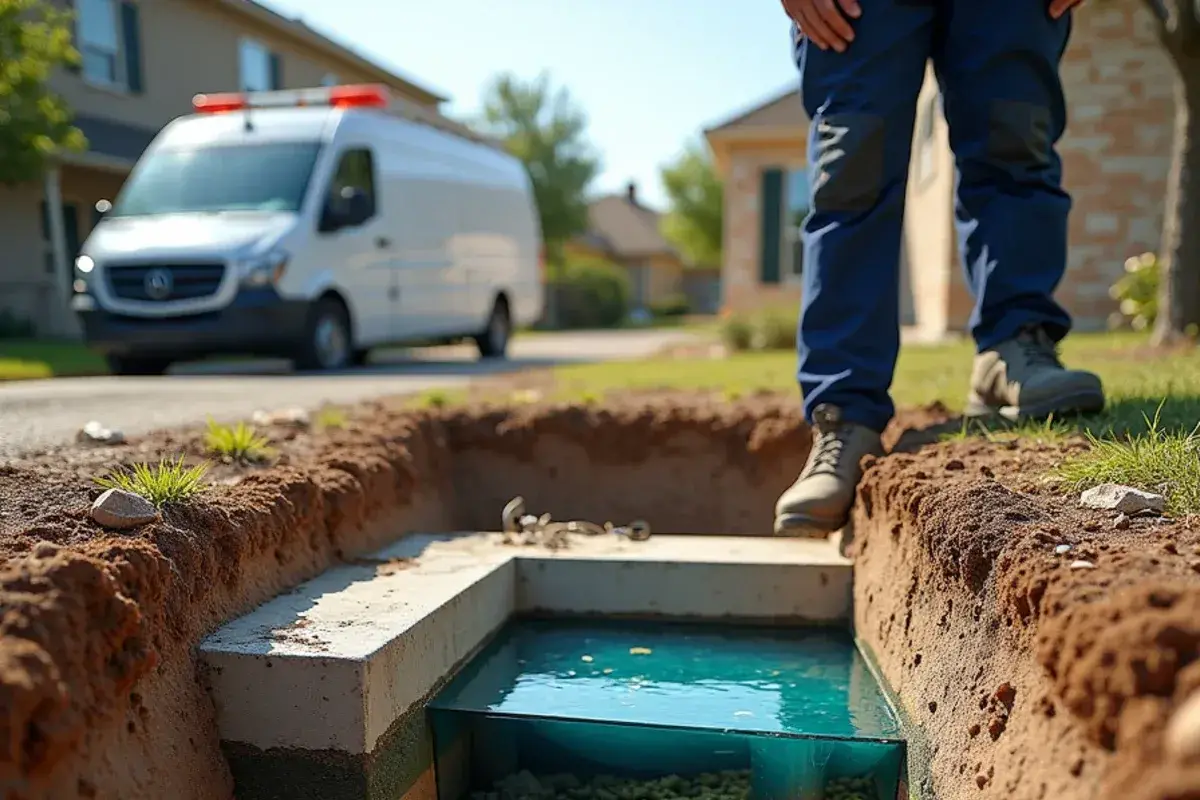
A conventional system is a buried tank and a drain field. Solids settle to the bottom as sludge, grease and light material float as scum, and bacteria break down what they can. The clearer water in the middle flows out to the field, where the soil finishes the treatment.
Much of the Hill Country has thin soil over limestone, which leaves little depth for a drain field. On those lots a site evaluation often points to an aerobic treatment unit instead. It pumps air into the tank, disinfects the water, then sprays it across the yard through pop-up heads.
Both types share one weakness. Anything bacteria cannot digest stays in the tank until it is pumped, and anything that kills bacteria slows the whole process down. Your drains are the only way in, so habits at the sink matter more than they would on a city line.
That describes plenty of homes around Liberty Hill, where rural lots in the SH 29 corridor run on private wells and septic. It also fits many homes in Salado outside the village sewer.
Daily habits
Septic safe plumbing tips for every room in the house
None of these cost anything. Together they are the difference between pumping on schedule and pumping in an emergency.
| Room | Do | Avoid |
|---|---|---|
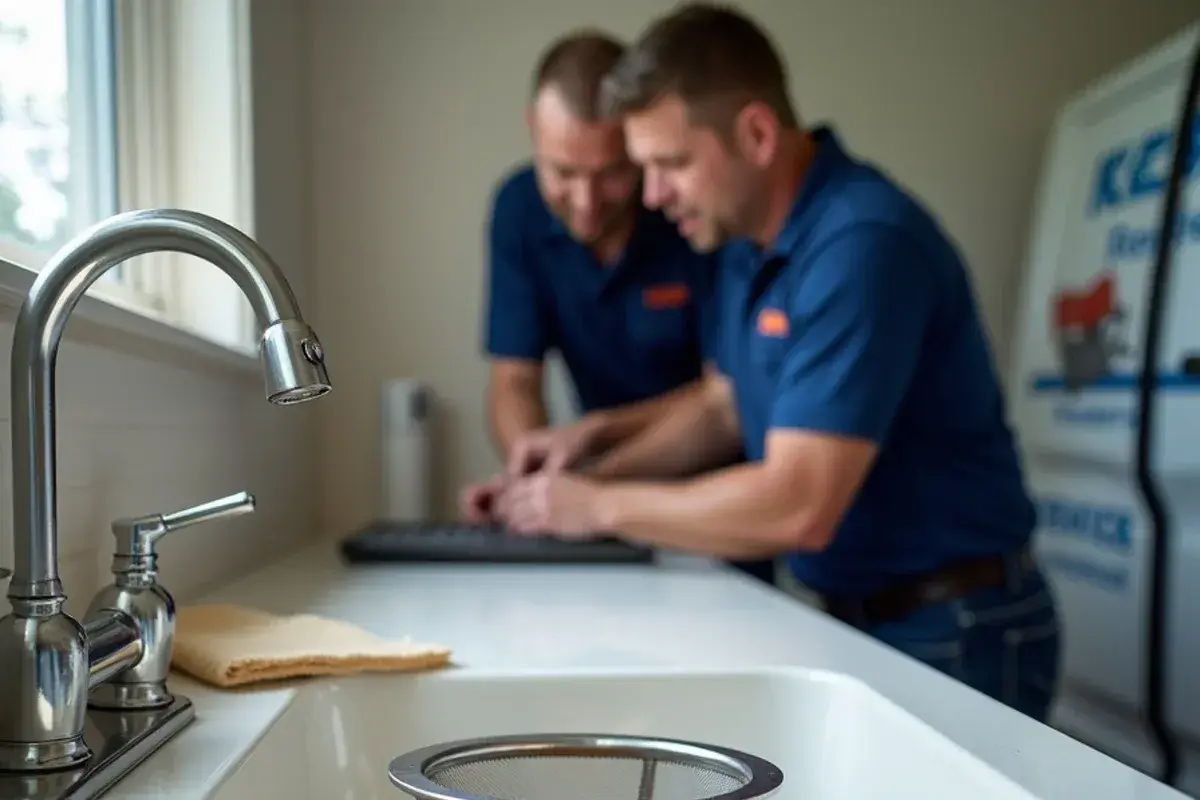
| Kitchen | Wipe greasy pans with a paper towel and bin it. Use a sink strainer. | Pouring fat, oil or coffee grounds down the drain. |
| Bathrooms | Flush only waste and toilet paper. Fix running toilets and dripping faucets promptly. | Wipes of any kind, including those sold as flushable, plus floss, cotton and hygiene products. |
| Laundry | Spread loads across the week and clean the lint trap. | Five loads back to back on a Saturday, which floods the tank and pushes solids out. |
| Cleaning | Use ordinary cleaners at normal strength. | Drain openers, large doses of bleach and dumping leftover chemicals or paint. |
| Outdoors | Keep roof runoff, sprinklers and vehicles off the tank and drain field. | Building, paving or planting trees over the field. |
Water volume is the habit most people miss. A tank needs time to let solids settle. A leaking toilet flapper can send hundreds of gallons a day through it, so solids reach the drain field before they settle.
Chemical drain openers deserve a special mention. A dose large enough to clear a clog is large enough to set back the bacteria in the tank. On septic, a slow drain is a job for a cable, not a bottle.
Expert insight
Softeners, disposals and laundry day: the trade-offs on a septic lot
Some septic advice is simple. These three need judgement, because each one has a real benefit as well as a cost.
Water softeners
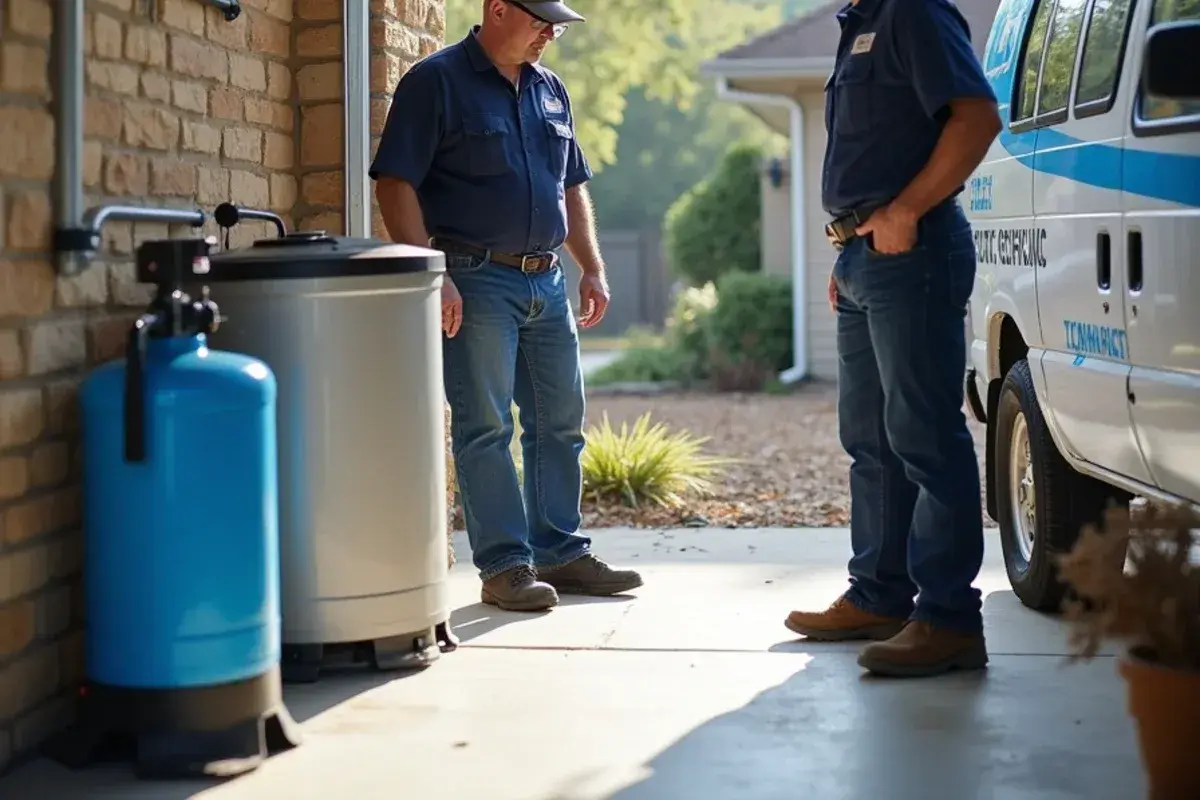
Well water around Liberty Hill is very hard, so many septic homes also run a softener. Each regeneration sends brine and a large rinse volume into the drains. Opinions differ on how much the salt matters, but the extra water is real, and some aerobic unit makers set conditions on softener discharge.
The practical answer is a demand-initiated softener that regenerates by usage rather than by the calendar. Then check your aerobic unit's instructions and ask your septic designer or maintenance provider before routing the discharge.
Garbage disposals
A disposal does not add water so much as solids. Ground food settles as sludge and fills the tank faster, which shortens the time between pump-outs. If you keep one, scrape plates into the trash or compost first and use the disposal for scraps that slip past.
Laundry and long showers
An aerobic unit handles a steady flow far better than a surge. Washing every load on one day can push partly treated water through faster than the unit can process it. Spreading loads out costs nothing and protects the spray field.
Older homes add one more variable. In historic houses near Salado Creek, the drain line from the house to the tank may be cast iron or clay tile. Roots and offset joints there cause backups that have nothing to do with the tank.
The rules
What do TCEQ and the counties actually require?
Texas regulates septic systems as on-site sewage facilities, or OSSFs, under 30 TAC Chapter 285.
TCEQ requires a permit and an approved plan to build, alter, repair, extend or operate an OSSF. An emergency repair can start without one, but it must be reported in writing to the permitting authority no later than 72 hours after work begins. Local programs may set stricter rules.
Many local governments run the program as TCEQ authorized agents. Williamson County administers its own OSSF program, which covers rural Liberty Hill lots. For Bell County addresses, including Salado, TCEQ's "Find your permitting authority" map names the office that handles your property.
Aerobic units carry extra rules. TCEQ requires a maintenance contract with a maintenance provider who holds a TCEQ license. That provider reports to the permitting authority and the owner at least once every four months. Two years after installation, owners may take over maintenance on certain systems, unless the local authority is stricter.
Pumping is advice rather than a fixed rule. TCEQ suggests every three to five years for a conventional tank, and for aerobic units it depends on sludge depth and the maker's guidance. In Salado, the village sewer first served the business district, so check with the village before assuming a nearby property can connect.
Troubleshooting
Clogged drain or full tank? Telling the two apart
A backup on a septic property has two possible homes: the drain line inside the house, or the tank and field outside. The cleanout tells you which.
Count the slow fixtures
One slow sink is a local clog. Every fixture slow at once, toilets gurgling, or water rising in a shower when the washer drains points to the main line or the tank.
Check the aerobic alarm and the yard
A lit alarm, a sewage smell over the field or a soggy patch above the tank points outside, not to the drains.
Open the outdoor cleanout
Unscrew the cap on the cleanout between the house and the tank, slowly and with gloves on.
Read what you see
Standing water in the cleanout means the blockage is downstream, at the tank inlet or in a full tank. A dry cleanout means the clog is inside the house.
Call the right trade
House-side clogs and a broken line to the tank are plumbing. A full tank or a failed field needs a septic pumper or an installer who holds the right TCEQ license.
For the house side, drain and sewer cleaning clears the line with a cable, and a camera shows roots or a sag. When the pipe to the tank is cracked or settled, sewer line repair replaces that run. We quote on site before the work starts and pull permits when a job needs one.