

The noise
What is that popping or rumbling in the water heater?
It sounds alarming, but it is usually a sign of buildup rather than an imminent burst.
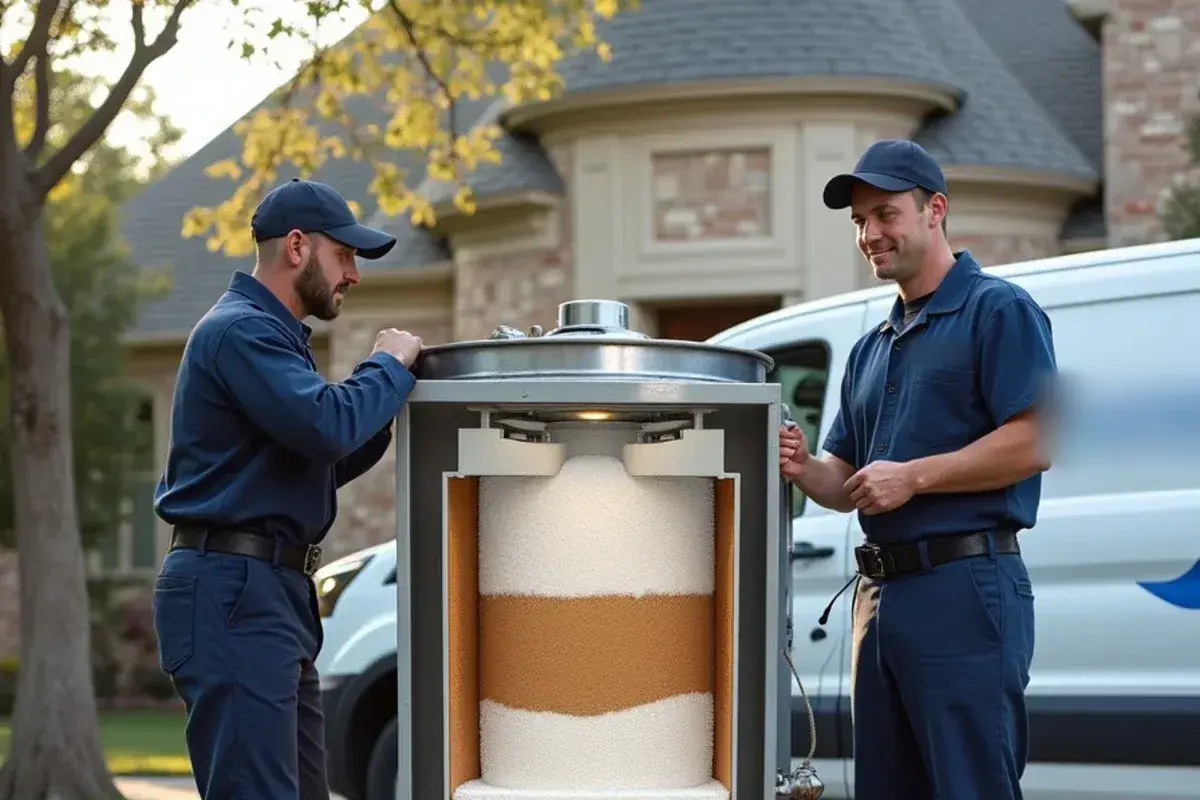
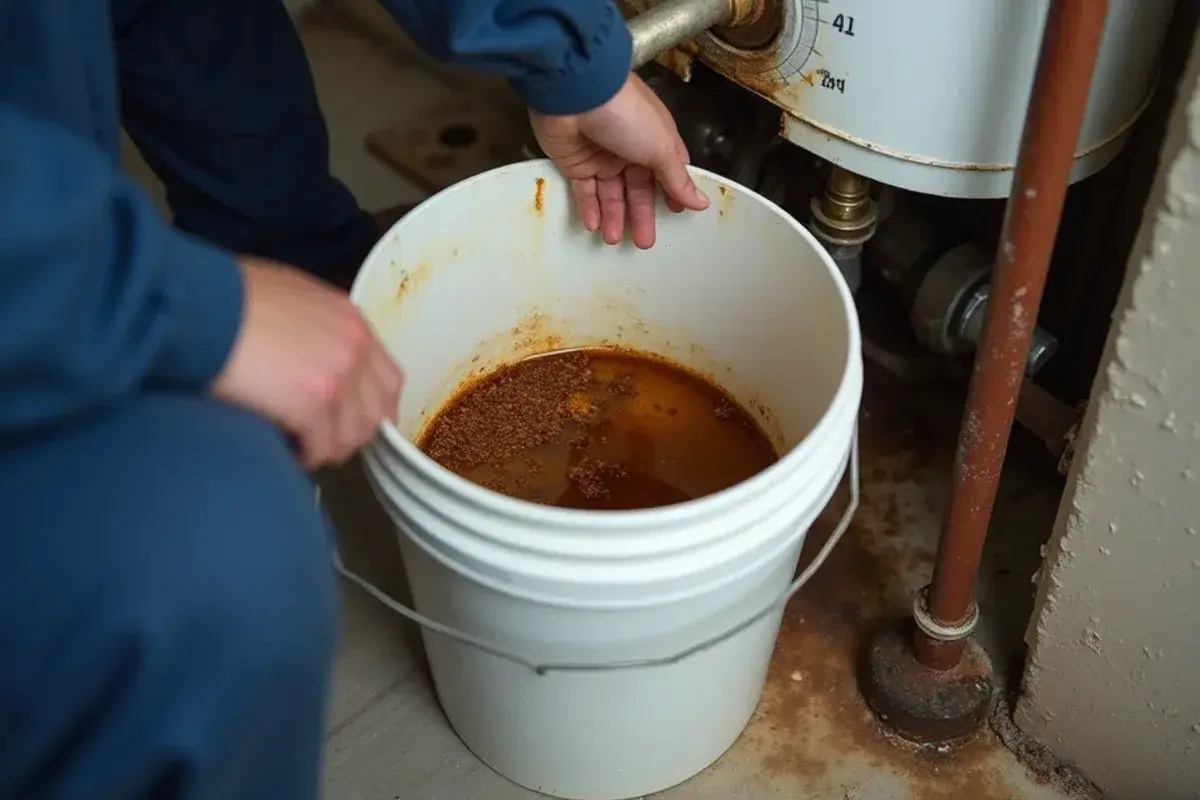
As water heats, dissolved calcium and magnesium fall out as scale. Add any sand or grit the supply carries, and a crust builds on the tank floor. The harder the water, the faster it grows. Georgetown’s city water runs about 10–11 grains per gallon from two plants and about 19 from the other two.
On a gas heater, the burner fires under that crust. Water trapped in pockets beneath it flashes into steam bubbles, and each one collapses with a pop. A steady rumble just means more of them at once.
Electric tanks make a different sound. The lower element sits close to the bottom, gets buried, and crackles or hisses as it heats scale instead of water. Buried elements run hot and fail early, which is a common reason an electric tank loses its hot water halfway through a shower.
Warning signs
Other signs sediment is building up
Noise is the most obvious symptom, but the heater usually gives a few quieter hints before it gets loud.
Check for these alongside the popping
- Hot water runs out sooner than it used to with the same household
- White or tan flakes in faucet aerators or the dishwasher filter
- Cloudy or gritty water from hot taps only
- A drain valve that drips or weeps after it has been opened
- Longer recovery times after baths or laundry
- On electric tanks, a lower element that keeps burning out
Rusty water from the hot side only is a different and more serious sign. It often points to a spent anode rod or corrosion inside the tank, which flushing will not fix.
How-to
How do you flush a tank water heater safely?
Set aside about an hour, plus time for the water to cool. Read your heater’s manual first, since it takes priority over any general guide.
Shut off the heat source
On an electric tank, switch off its breaker so the elements cannot fire in an empty tank. On a gas tank, turn the control to off or pilot, following the label on the unit.
Let the water cool
Tank water can scald. Wait a few hours, or run hot water at a tub until it comes out warm rather than hot.
Close the cold supply
Turn off the valve on the cold inlet line at the top of the heater. If it will not close fully, use the house main shut-off instead.
Connect a hose and open a hot tap
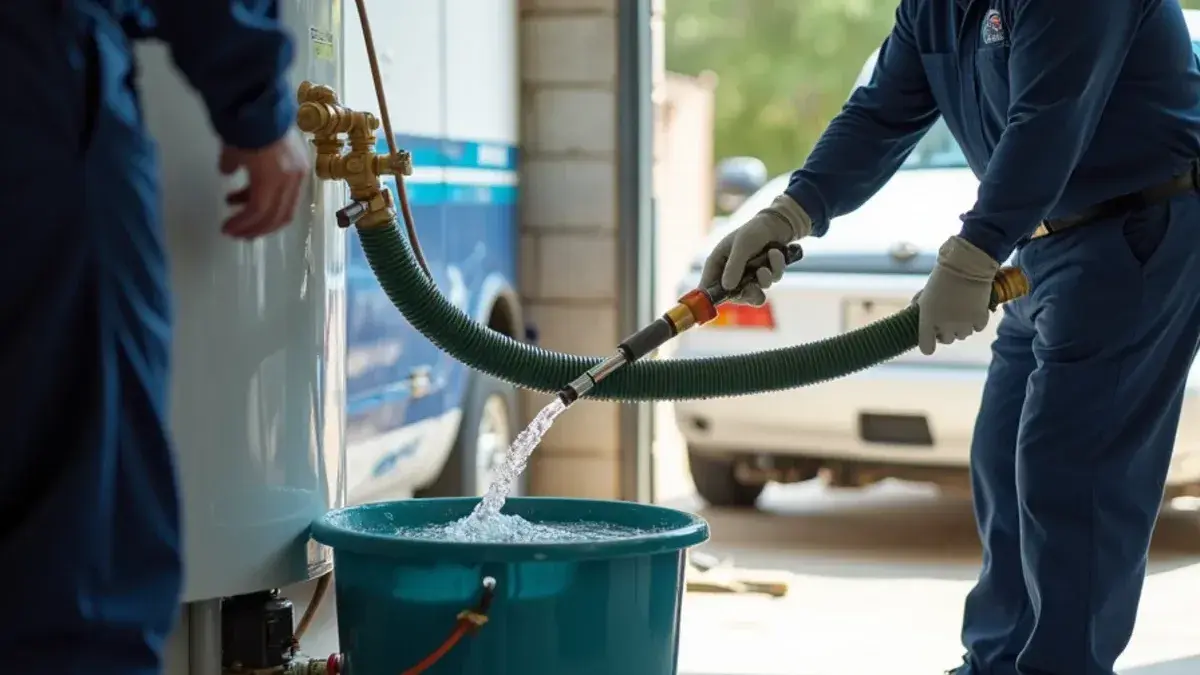
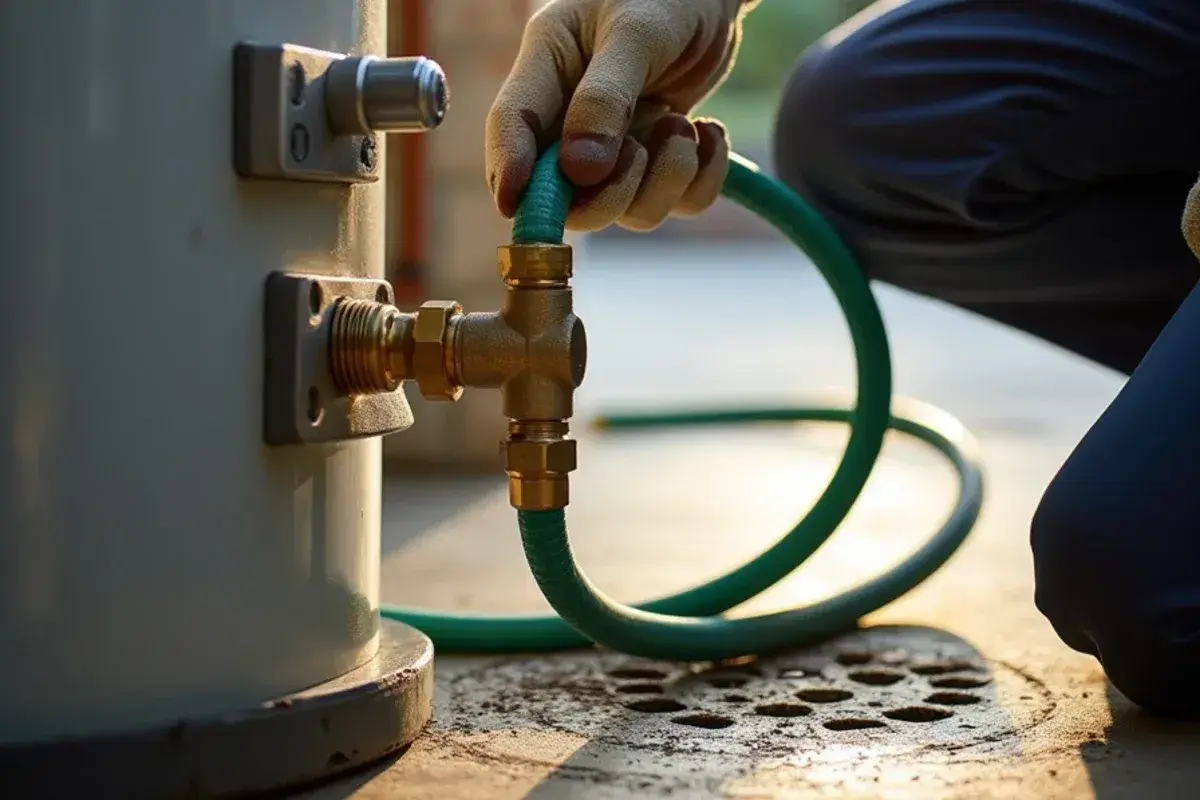
Thread a garden hose onto the drain valve and run it to a floor drain, the driveway or a bucket. Open a hot faucet upstairs or nearby so air can enter and the tank drains freely.
Drain, then stir it up
Open the drain valve and let the tank empty. Then briefly reopen the cold supply with the drain still open to churn the bottom, and repeat until the water runs clear.
Refill completely before restoring heat
Close the drain valve, open the cold supply and leave the hot faucet running until it flows without sputtering. Only then restore the breaker or relight the gas.
Check for leaks
Watch the drain valve for drips for the next day. Plastic drain valves on older tanks sometimes crack or will not reseat after a flush.
Leave the relief valve alone unless you are ready to replace it
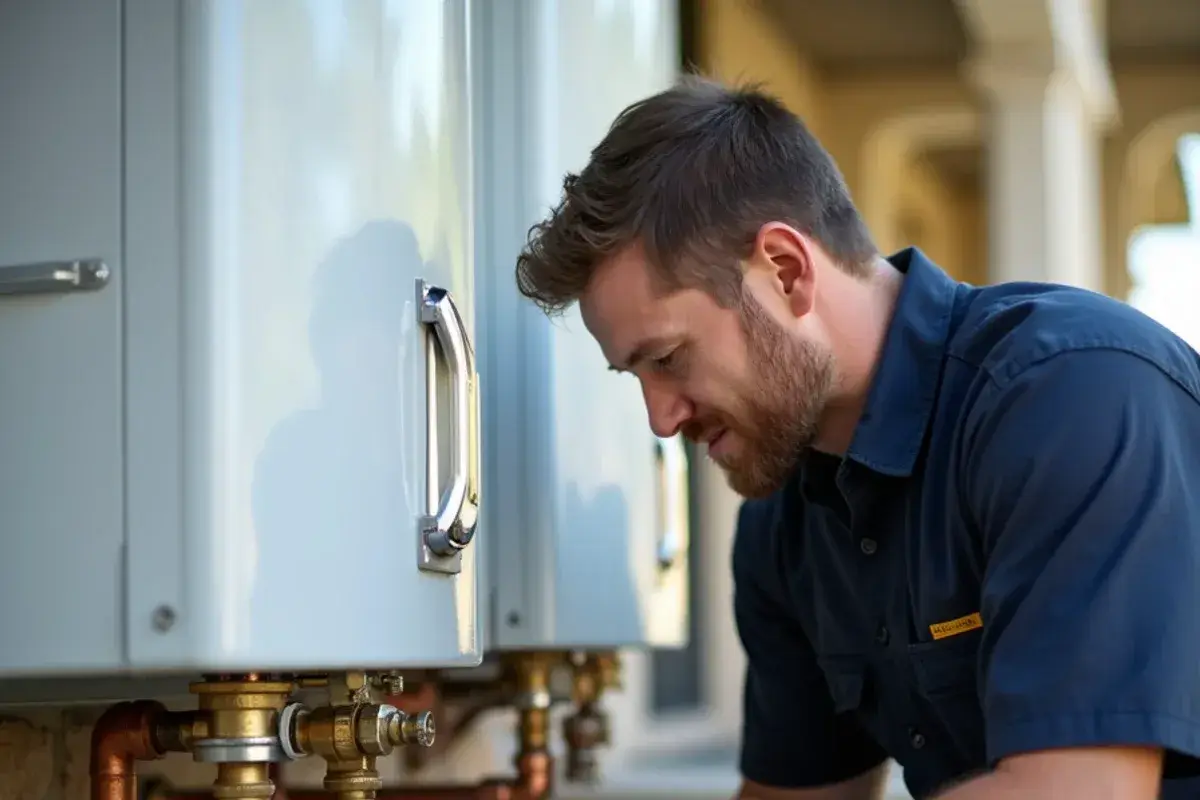
The temperature and pressure relief valve on the side or top of the tank protects it from overpressure. Opening it lets air in, but on an older tank it may not reseat and will keep dripping. Never cap or plug its discharge pipe.
Expert insight
When is flushing too late?
A flush is maintenance, not a cure. Past a point it can even start the leak you were hoping to avoid.
Most plumbers recommend flushing a tank heater at least once a year, and more often on hard water. Tanks that have never been flushed for eight or ten years are a different case. The sediment can be inches deep and packed hard. The drain valve clogs as soon as it opens, and stirring the bottom can expose thin spots the crust was hiding.
Storage heaters typically last about 10–15 years. On an old tank that has never been serviced, we usually check the anode rod and the drain valve before any full flush. Often the better plan is a planned replacement rather than forced maintenance.
| What you notice | Will a flush help? | What it usually means |
|---|---|---|
| Popping on a tank under about 8 years old | Yes | Normal hard-water buildup |
| Popping that returns weeks after a flush | Partly | Hard, packed scale; consider a softener |
| Drain valve clogs and nothing flows | Not by itself | Needs a valve replacement or professional flush |
| Rusty hot water only | No | Spent anode or tank corrosion |
| Water pooling under the tank | No | Tank or fitting leak; plan a replacement |
A replacement needs a city permit in Georgetown and in most nearby cities, so it is worth doing on your schedule rather than after the tank splits. Our water heater repair visits cover flushes, drain valves, anode rods and elements, and we quote any replacement on site.
Local water
Why Jarrell and Hutto heaters collect sediment
Two towns, two different reasons the tanks fill up.
Most homes in Jarrell were built after the May 1997 tornado, and the Sonterra-era subdivisions are newer still. Water comes from Jarrell-Schwertner WSC or private wells. Well water can carry fine sand along with hardness, and that grit settles in the tank just like scale.
Hutto is mostly production homes from the 2000s onward, and many still run the original builder-grade heater, now 10–20 years old. Those tanks have reached the age where a first flush is risky and a replacement plan makes sense. Newer homes in both towns benefit most from starting annual flushes early.
On a well, a sediment filter ahead of the house catches sand before it reaches the heater, and a softener slows the scale. Neither replaces the flush, but together they stretch the time between them and keep the drain valve from clogging.